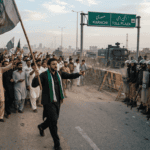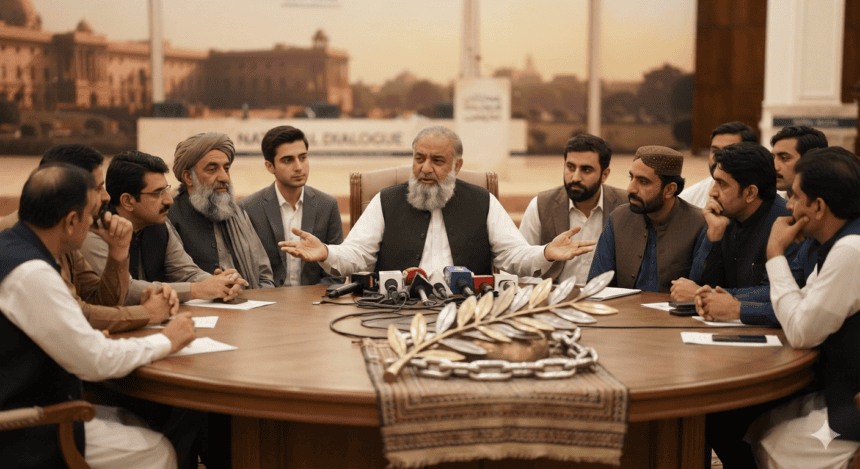
JUI-F Chief Maulana Fazl-ur-Rehman has formally proposed a grand national dialogue, aiming to bring the country’s fractured political factions to the table. His call comes amid deepening tensions between the government and the opposition, with the veteran politician warning that the status quo is pushing the state toward instability.
Fazl-ur-Rehman, speaking at a press conference in Islamabad, argued that current parliamentary processes have failed to resolve fundamental disagreements. He suggested that if political parties refuse to engage in a structured, direct dialogue, the path remains open for “non-political forces” to intervene—a veiled reference to the establishment that has historically dominated Pakistan’s power corridors.
The proposal isn’t just about optics. It targets the core friction points: the legitimacy of the current government, the conduct of the recent general elections, and the ongoing economic crisis. By pushing for a “national consensus,” the JUI-F leader is positioning his party as a mediator, attempting to carve out space in a political landscape currently dominated by the clash between the PML-N-led coalition and the PTI.
Critics, however, remain skeptical. Many within the opposition camp view Fazl-ur-Rehman’s overtures as a tactical move to regain political relevance after his party’s poor showing in the February polls. Meanwhile, government insiders have signaled that while they are open to “constructive engagement,” they are unwilling to discuss issues they consider settled, such as the results of the general elections.
The timing of this appeal is critical. With the country struggling to meet IMF fiscal requirements and facing a volatile security situation, the political temperature is climbing. Fazl-ur-Rehman’s insistence on a dialogue suggests he senses a breaking point.
“We cannot afford to remain at each other’s throats while the state teeters on the edge,” he told reporters. He didn’t offer a specific roadmap for how this dialogue would be structured or who would chair the sessions, leaving the door wide open for political maneuvering.
Whether this call gains traction or fades into the background as another failed peace offering depends on how the PTI and the ruling coalition respond in the coming week. For now, the proposal serves as a stark reminder that in Pakistan’s current climate, the biggest threat to the system remains the inability of the players to sit in the same room.