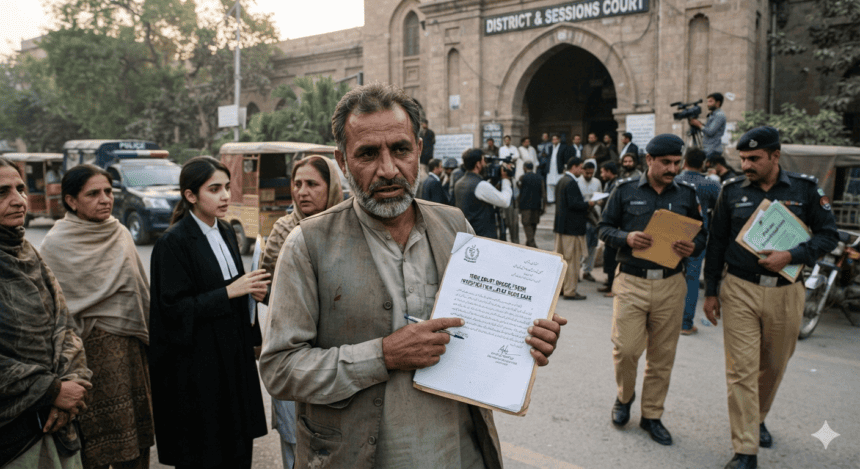
The Lahore High Court has ordered a fresh, impartial investigation into the murder of Ayat Noor, rejecting the initial police findings that had left the victim’s family demanding justice for months. Justice Ali Zia Bajwa, presiding over the case, directed the Inspector General of Police (IGP) Punjab to constitute a new Joint Investigation Team (JIT) to re-examine the evidence.
The family of the young victim has long maintained that the initial investigation was compromised, alleging that local police colluded with the accused to weaken the case. This court order arrives after multiple petitions were filed, highlighting glaring omissions in the original police report—specifically the failure to collect forensic evidence from the crime scene in a timely manner.
“The integrity of the investigation is the bedrock of our justice system,” Justice Bajwa noted during the hearing. He made it clear that the new team must operate without any external influence or local political pressure.
The case, which sparked public outcry and demands for stricter child protection laws, has become a focal point for activists tracking the rising number of violent crimes against minors. Critics of the previous investigation point to the “botched” recovery of evidence, which they claim allowed key suspects to avoid immediate interrogation.
The new JIT now faces a tight deadline. The court has requested a progress report within 15 days, signaling that the judiciary is no longer willing to tolerate the procedural delays that have plagued the inquiry since the incident occurred.
For the grieving family, the order provides a sliver of hope. They have spent months in courtrooms, challenging the narrative presented by the previous investigation officers. As the new team prepares to take over, the focus remains on whether they can secure the forensic and digital evidence—crucial leads that were allegedly overlooked in the first round—to bring the perpetrators to account.
The IGP’s office is expected to notify the names of the new JIT members by the end of the week. With the case now under direct judicial oversight, the state’s ability to conduct an unbiased investigation is officially on trial.