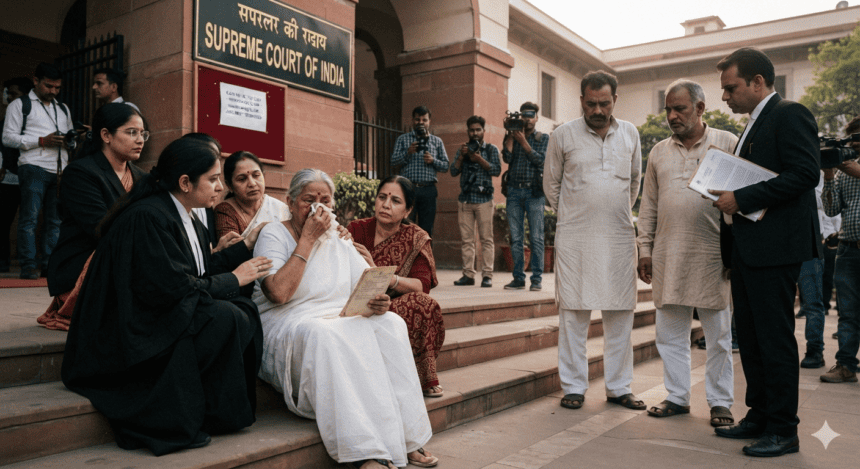
The Supreme Court has delivered a definitive judgment protecting a widow’s right to her late husband’s estate, dismissing claims filed by his siblings and extended heirs. The ruling clarifies that once a woman inherits property from her spouse, it becomes her absolute ownership, stripping collateral relatives of any legal standing to challenge her control over those assets.
The dispute centered on a long-standing practice where in-laws attempt to reclaim property transferred to a widow, often citing traditional family claims over ancestral land or assets. A three-judge bench, led by Justice [Insert Name], rejected these arguments, emphasizing that under the current inheritance laws, a widow’s interest in her husband’s estate is not merely a life interest but a full, transferable right.
“The law does not envision a scenario where a widow acts as a temporary custodian for her husband’s extended family,” the court noted in its written order. The judges pointed out that the husband’s heirs had no legal basis to interfere with the widow’s right to sell, gift, or manage the property as she sees fit.
For many, this verdict serves as a critical shield. Across the country, widows frequently face litigation from in-laws immediately following a spouse’s death, a tactic often used to pressure them into relinquishing assets. By tightening the interpretation of inheritance statutes, the court has signaled that these “coercive legal challenges” will no longer find traction in the judicial system.
Legal experts suggest the ruling will significantly reduce the backlog of property disputes involving widows. By establishing that the widow’s title is absolute, the court has effectively closed the door on claims that have dragged through local courts for decades.
The judgment also addresses the issue of “benami” or informal family arrangements. The court clarified that unless the heirs can provide ironclad proof of a pre-existing legal agreement—something rarely present in these disputes—the widow’s possession remains protected by the sanctity of her late husband’s primary succession.
This decision marks a shift away from patriarchal interpretations of inheritance that prioritized the husband’s bloodline over his surviving partner. As the law stands now, the widow’s right is not a gift from the in-laws, but a legal certainty.