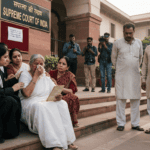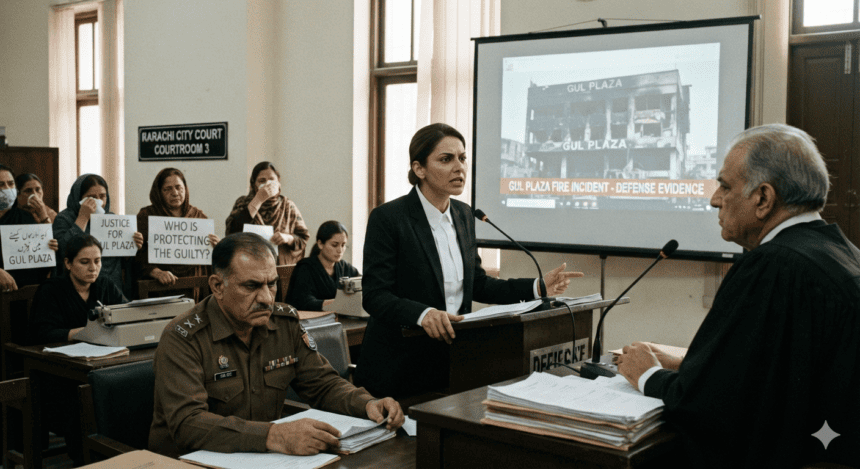
The legal battle surrounding the devastating Gul Plaza fire took a sharp turn this week. Defense attorneys accused police investigators of intentionally shielding government agencies from liability, alleging a systemic effort to dilute the case. The accusations surfaced as the court denied a request to form a Joint Investigation Team (JIT), opting instead to keep the current police probe intact.
For the families of those affected, the court’s decision is a major blow. They’ve spent months pushing for an independent, multi-agency investigation, arguing that the local police lack the independence—and the resources—to hold powerful government departments accountable for alleged safety code violations.
“We aren’t seeing an investigation; we’re seeing a cover-up,” said lead defense counsel in the courtroom on Tuesday. He argued that critical evidence linking the blaze to faulty infrastructure overseen by government bodies is being systematically ignored by the current investigation team.
The police, however, maintain their work is thorough. They told the judge that the current investigation has already gathered sufficient technical data and that a JIT would only complicate the legal process, potentially delaying the filing of a final challan.
The court’s refusal to appoint a JIT leaves the prosecution—and the defense—at a standstill. The judge noted that the current investigators have not yet reached a point of failure that would warrant an outside team, effectively placing the burden on the defense to prove bias rather than just alleging it.
Gul Plaza remains a symbol of the city’s crumbling safety standards. The fire, which gutted the commercial hub, exposed deep-seated issues with fire hydrant accessibility and emergency exits—infrastructure that falls under the purview of multiple municipal agencies.
By keeping the case within the local police jurisdiction, the court has signaled a preference for procedural continuity over the defense’s demand for a broader, independent inquiry. Whether this leads to a conviction or a quiet dismissal remains the core question. For now, the files stay with the same investigators the defense claims are compromised, leaving the families of the victims waiting for an accountability that feels increasingly out of reach.