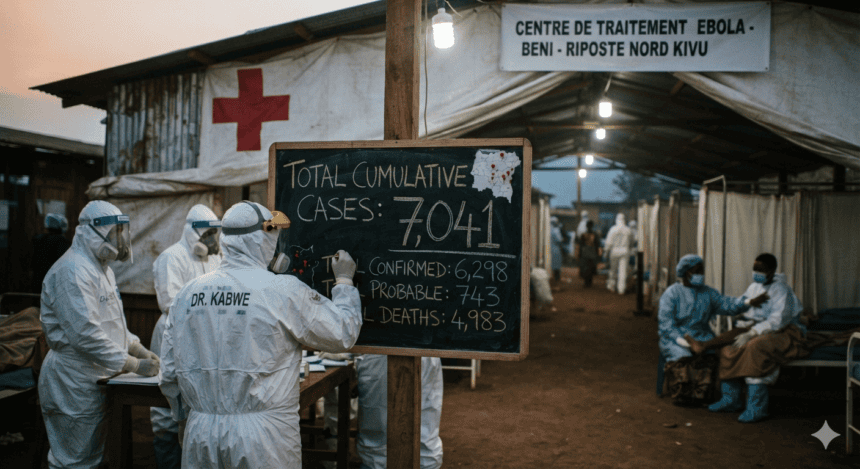
GOMA — The Democratic Republic of Congo’s ongoing Ebola crisis has officially crossed the 7,000-case threshold, marking the most lethal outbreak in the nation’s history. Health officials confirmed the grim milestone late Tuesday, as the virus continues to outpace containment efforts in the volatile eastern provinces.
The surge in cases reflects a collapse of public trust in the region. Decades of civil conflict have left residents skeptical of government-led health interventions. When medical teams arrive in villages, they are often met with stone-throwing protests rather than cooperation. This friction turns simple contact tracing into a high-stakes security operation.
“We are fighting a virus, but we are losing the people,” said a senior field coordinator with an international medical NGO. “The data points are not just numbers; they represent families who refuse to report symptoms because they fear the isolation wards.”
The current mortality rate remains stubbornly high. With over 4,500 confirmed deaths attributed to this strain, the fatality rate hovers near 65%. While vaccines are available, they reach the frontlines far too slowly. Supply chain bottlenecks, combined with the rugged, inaccessible terrain of North Kivu, keep the life-saving doses from reaching the most isolated hotspots.
International donors have pledged millions to bolster the response, yet the funds often get caught in bureaucratic red tape before reaching the clinics. Meanwhile, the virus moves through densely populated transit hubs. Traders moving between Goma and neighboring Rwanda carry the risk with them, turning a localized health crisis into a regional security threat.
The World Health Organization has resisted declaring a global emergency, a move that would unlock significant funding but potentially trigger travel bans that could cripple the local economy. For now, the strategy remains localized: identify, isolate, and hope the next shipment of vaccine arrives before the next village outbreak.
As the death toll climbs, the medical community acknowledges a reality they rarely say out loud: the current containment strategy is failing. Without a fundamental shift in how the government engages with local tribal leaders, the numbers will continue to rise.
The outbreak won’t end with medicine alone; it ends when the people decide they have more to fear from the virus than from the doctors.