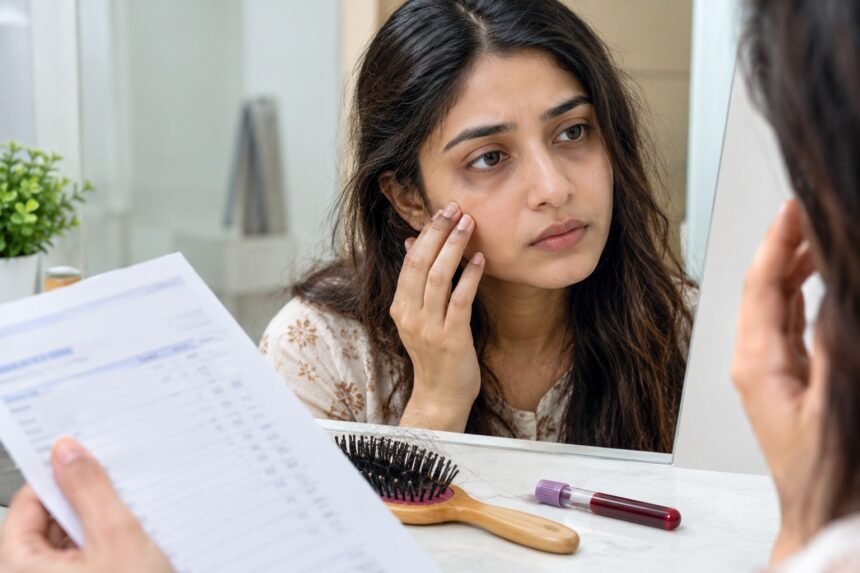
A new social media trend called “ferritin face” is encouraging people to examine their faces for possible signs of iron deficiency. The trend focuses on changes such as pale skin, dark circles under the eyes, dull hair, brittle nails and dry lips. However, medical experts warn that these signs alone cannot confirm low iron levels.
Ferritin is a protein that stores iron in the body. A blood ferritin test helps doctors assess the body’s iron reserves. Iron is essential for producing haemoglobin, the protein in red blood cells that carries oxygen throughout the body.
When iron levels become too low, some people may experience unusual paleness, fatigue, hair loss and brittle nails. In some cases, cracks may also develop at the corners of the mouth. However, not everyone with low ferritin experiences visible changes, and these symptoms can have several other causes.
Dark circles under the eyes, for example, may be linked to genetics, allergies, pigmentation or insufficient sleep. Hair loss and dry skin can also result from stress, hormonal changes, thyroid problems or other nutritional deficiencies.
Experts stress that “ferritin face” is a social media term, not a recognised medical diagnosis. Looking at someone’s face cannot determine their ferritin level or establish whether they have an iron deficiency.
People experiencing persistent fatigue, weakness, shortness of breath, a racing heartbeat or unusual hair loss should consult a healthcare professional. Depending on their symptoms, a doctor may recommend a complete blood count (CBC), a ferritin test and other iron studies.
Health professionals also advise against taking iron supplements simply because someone identifies with symptoms shown in a social media video. Excess iron can be harmful, and taking supplements without proper assessment may delay the diagnosis of another health condition.
The main takeaway from the ferritin face trend is that persistent changes in appearance or wellbeing deserve attention, but self-diagnosis should be avoided. Appropriate medical assessment and blood tests are needed to determine whether iron deficiency is present and what treatment, if any, is required.