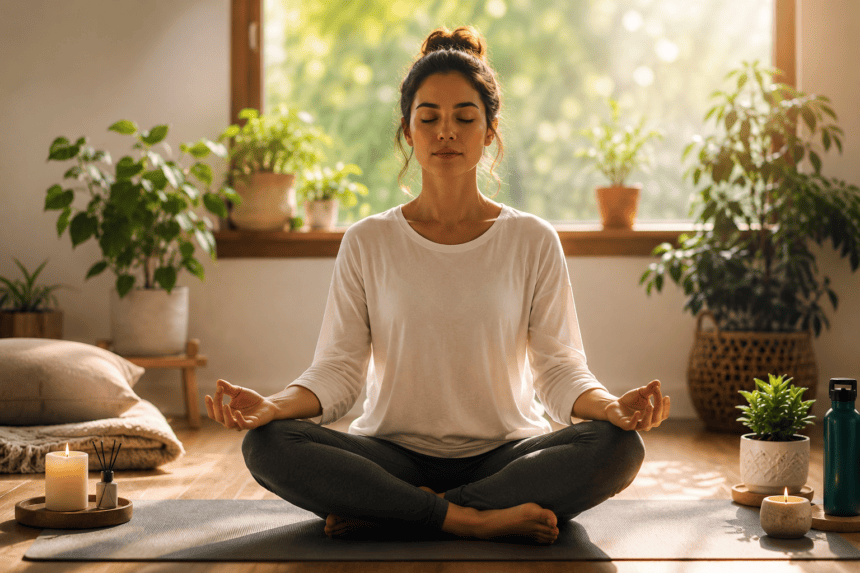
Health: In the middle of busy schedules, academic pressure, work responsibilities and everyday concerns, taking just a few minutes to pause and focus on breathing can provide a simple way to practice mindfulness. A five-minute breathing routine requires no special equipment and can be practiced almost anywhere.
Mindfulness involves paying attention to the present moment rather than becoming overwhelmed by thoughts about the past or future. For beginners, breathing is often one of the easiest points of focus because it is always available and does not require complicated techniques.
To begin, sit comfortably in a quiet place. Keep your back relaxed and allow your shoulders to drop naturally. Close your eyes if that feels comfortable, or simply lower your gaze.
Start by noticing your normal breathing. There is no need to immediately make the breaths deep or force them to become slower. Simply pay attention to the movement of air as you breathe in and out.
After a few breaths, gradually allow your breathing to become slow and comfortable. Focus on the sensation of the breath entering the nose, moving through the body and leaving again. If your attention moves to another thought, gently notice it and return your focus to the breath.
A simple five-minute routine can be divided into several stages. Spend the first minute settling into a comfortable position and noticing your breathing. During the next three minutes, focus primarily on slow, steady breaths. Use the final minute to notice how your body and mind feel before returning to normal activities.
The goal is not to completely empty the mind. Thoughts will naturally appear, particularly when someone is new to mindfulness. Instead of becoming frustrated, beginners can simply recognize the distraction and bring their attention back to breathing.
Regular practice may also make mindfulness easier over time. People can choose a consistent part of the day, such as after waking up, during a study break, after work or before going to bed.
For students, a short breathing exercise may provide a useful pause between study sessions. For people working long hours, it can serve as a brief break from screens and daily responsibilities. Even a few quiet minutes can create an opportunity to slow down and reconnect with the present moment.
Mindfulness should not be viewed as a replacement for professional treatment when someone is experiencing serious or persistent mental-health difficulties. However, for many beginners, simple breathing exercises can be a practical addition to a healthy daily routine.
The most important part of the practice is consistency rather than duration. A person does not necessarily need to spend a long time meditating to begin developing mindfulness. Starting with five comfortable minutes each day can make the habit easier to maintain.
With regular practice, people can gradually experiment with longer sessions or other mindfulness techniques. The basic principle remains the same: pause, notice the breath, recognize distractions without judgment and gently return attention to the present moment.