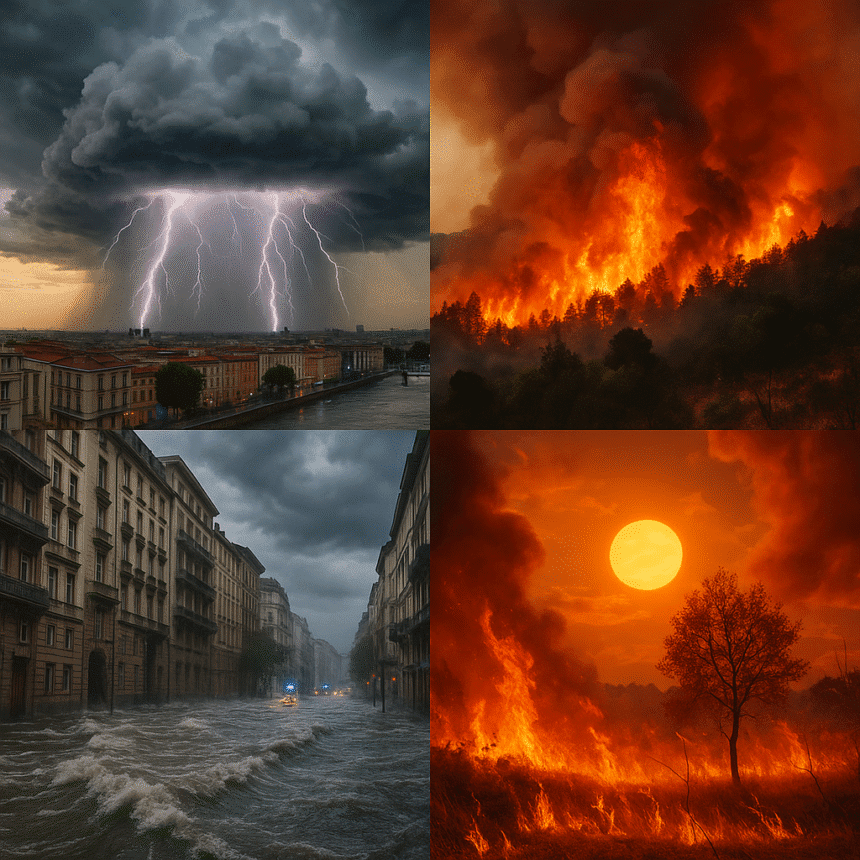
Europe is going through a summer like never before wildfires burning across countries, deadly storms hitting cities, and extreme heatwaves leaving people and nature at risk. The big question everyone is asking: Is climate change the main cause?
Let’s discuss what’s been happening across Europe and what experts are saying.
Wildfires Out of Control in France, Spain, Türkiye, and Greece
In the south of France, wildfires have reached dangerously close to the port city of Marseille. More than 1,000 firefighters have been working day and night as the flames consumed over 720 hectares of land. Homes have been evacuated, flights delayed, and trains disrupted.
So, what caused it?
Climate scientist Max Dugan Knight says that while the fire may have started with a car incident, the real problem is the extreme fire weather hot, dry, and windy conditions made worse by climate change. “Even a small spark can turn into a disaster,” he warns.
It’s not just France.
In Türkiye, wildfires in Izmir were triggered by faulty power lines, but the intense heat, wind, and dry air made the fires grow rapidly.
Fires along the Turkish-Syrian border have burned 10,000 hectares of forest, with Syrian officials calling it a “tragic loss.”
In Greece, tourists were forced to flee from Crete and areas near Athens as fires destroyed olive groves and forests during near 40°C heat
From Droughts to Floods: The Danger of “Weather Whiplash”
Europe isn’t just facing fires. It’s also experiencing “hydroclimate whiplash” sudden changes from dry droughts to heavy rains.
This is a dangerous mix. After rains, plants grow quickly. But in extreme heat, they dry out just as fast becoming fuel for wildfires.
“Climate change is making wildfires more frequent and more dangerous,” Dugan Knight explains. “And when wildfires burn, they release more emissions making climate change worse. It’s a cruel cycle.”
Balkans Hit by Storms After Intense Heat
The Balkans region has been hit hard too. Just days after a severe heatwave, Croatia faced a massive hailstorm that tore down trees and damaged buildings. At least three people were injured.
In Slovenia, snow fell in the Alps while heavy rain and hail hit the rest of the country. Then, the storm moved into Serbia, where over 600 wildfires had already been reported. The country is suffering from a severe drought, damaging crops and cutting drinking water supplies.
What Experts Are Saying: The Alarming Climate Risk Report
All of these extreme events are signs of a bigger problem. A new European Climate Risk Assessment (EUCRA) report has identified 36 major climate risks including threats to food, water, energy, ecosystems, economy, and people’s health.
The European Environment Agency (EEA) warns:
“Without strong climate action, heatwaves could kill hundreds of thousands, and damage from coastal floods could cost over €1 trillion per year.”
These risks have already reached dangerous levels and without urgent action, they could turn catastrophic.
What Can Be Done? The Time to Act is Now
Europe is clearly feeling the impact of climate change through fire, storms, drought, and floods.
Experts say that reducing carbon emissions, preparing for emergencies, and building climate-resilient infrastructure is the only way forward.
The European Environment Agency puts it plainly:
“We must adapt, prepare, and drastically cut emissions. There’s no more time to wait.”
Final Thoughts
This summer has shown us how serious climate change is. Whether it’s the fires in France, the drought in Serbia, or the deadly storms in Croatia we are all affected.
Now is the time to ask:
Are we doing enough to protect our planet and future generations?
Stay informed. Stay aware. And most importantly stay active in the fight against climate change.