Air India confirms 2018 FAA inspection advisory was not mandatory; Pilots’ body demands role in inquiry
As investigations continue into last month’s fatal crash of an Air India Boeing 787-8 Dreamliner, the U.S. Federal Aviation Administration (FAA) and Boeing have issued internal notifications assuring global regulators and operators that fuel control switch locks on Boeing aircraft are not a safety hazard.
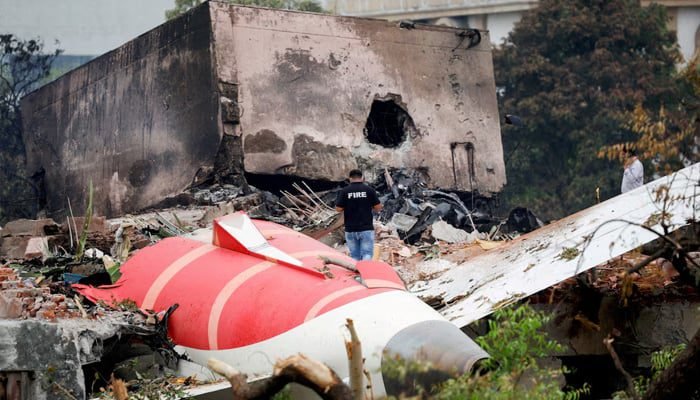
The FAA’s Continued Airworthiness Notification, dated July 11, comes in response to India’s preliminary investigation into the June 13 crash in Ahmedabad, which killed 260 people. The report had flagged concerns over the engine fuel cutoff switches, which were found flipped to the “cutoff” position moments after takeoff raising the possibility of accidental activation or mechanical failure.
However, according to the FAA’s communication seen by Reuters, the U.S. aviation regulator stated:
“Although the fuel control switch design, including the locking feature, is similar on various Boeing airplane models, the FAA does not consider this issue to be an unsafe condition that would warrant an Airworthiness Directive on any Boeing airplane models, including the Model 787.”
Boeing, in turn, referenced this FAA position in a Multi-Operator Message sent to airlines globally, advising no changes or immediate action required from operators. Both Boeing and the FAA declined to comment further beyond the existing notifications.
Crash Report Revives Focus on 2018 Advisory
The preliminary report by India’s Aircraft Accident Investigation Bureau (AAIB) referred to a 2018 FAA advisory which had recommended, but did not require, inspections of the fuel cutoff switch gates on Boeing aircraft including the 787 Dreamliner to ensure they could not be accidentally moved.
Air India confirmed in the report that it had not conducted the suggested inspections, since the advisory was not mandatory. However, the airline noted that the aircraft had undergone maintenance and the throttle control module which houses the fuel switches was replaced in both 2019 and 2023.
The report also confirmed that all airworthiness directives and service bulletins applicable to the aircraft and engines had been complied with.
Cockpit Voice Recorder Raises Questions
According to the investigation, the cockpit voice recorder captured a tense exchange between the pilots just before the crash. One asked: “Why did you cut off the fuel?” The other responded: “I didn’t.”The report noted that both fuel switches flipped from “run” to “cutoff” nearly simultaneously, just after takeoff, but did not explain how the switches could have been moved during flight.
Pilots’ Body Rejects Pilot Error Assumptions
In response, ALPA India, the pilots’ association affiliated with the International Federation of Air Line Pilots’ Associations (IFALPA), issued a strong statement rejecting any suggestion of pilot error, urging the government to ensure a transparent and evidence-based investigation.
ALPA India President Sam Thomas told Reuters, “The pilots’ body must now be made part of the probe, at least as observers.”
In a letter posted on social media, ALPA India pointed to the 2018 FAA advisory cited in the preliminary report and said this indicated a potential equipment malfunction, not a flight crew error.
U.S. Experts Support Observer Role for Pilots
Two U.S.-based aviation safety experts backed ALPA India’s request to participate as observers in the ongoing investigation. John Cox, a veteran pilot and former ALPA representative in the U.S., told Reuters that the AAIB’s report appeared to be “objective and fact-driven,” with no evident bias against the flight crew.
As the final probe unfolds, industry attention will remain fixed on the fuel switch mechanism and whether its design meets the stringent expectations of fail-safe engineering, particularly on critical flight phases like takeoff.
The next stages of the AAIB’s investigation are expected to include forensic engineering analysis, further data recorder examination, and possible simulation tests, as investigators seek to determine whether a design flaw, system malfunction, or human factor ultimately caused one of the deadliest aviation disasters in India’s recent history.