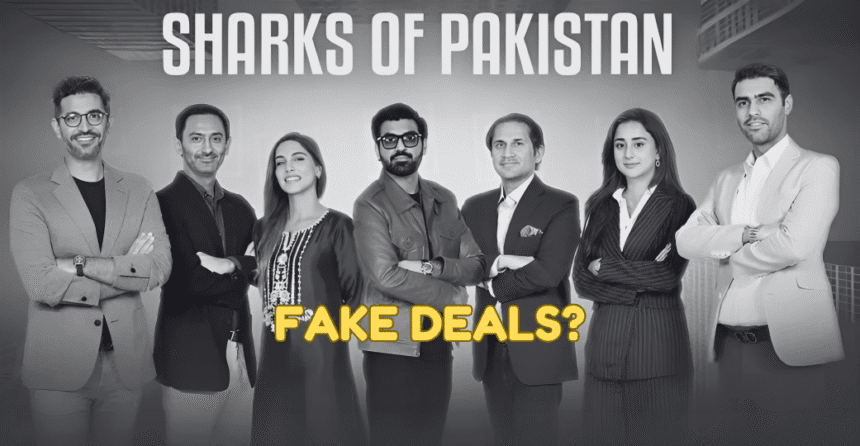
A young Pakistani entrepreneur has alleged that the investment deal he secured on the reality show Shark Tank Pakistan was never fulfilled, raising questions about the authenticity of the program’s on-air agreements and investor commitments.
Abdul Rehman Tasleem, the founder of Stuffeez.pk, appeared in Episode 7 of the show’s first season and finalized an agreement of PKR 5 million in exchange for 22 percent equity in his business. According to Tasleem, while the deal was celebrated during the recording and received public attention after the episode aired, the promised investment never arrived. He claims that he completed the due diligence process, submitted all the required documents, and maintained communication with the production and investors for weeks. However, the investors gradually stopped responding. One of them reportedly admitted to him that the other sharks were not serious and that he himself lacked the necessary funds, before also ending contact.
Tasleem’s revelation is not an isolated case. Reports suggest that only 4 out of the 36 televised deals in Shark Tank Pakistan Season 1 were actually executed, despite on-screen commitments. Several entrepreneurs who participated in the show have shared similar experiences, where deals announced during filming were later either canceled or ignored without explanation.
In addition to broken deals, some startups have come under scrutiny from the Federal Board of Revenue (FBR) after appearing on the show. Founders report being contacted by tax authorities for financial details and alleged irregularities, a development many did not anticipate when applying to participate in a television program. For some, the exposure meant recognition, but for others, it brought unforeseen regulatory pressure.
Criticism has also been directed toward what some see as preferential treatment of startups with elite academic backgrounds, particularly those founded by LUMS graduates. This has led to concerns about class bias and exclusion of grassroots entrepreneurs with equally innovative ideas but less privileged access.
Despite the growing criticism, Shark Tank Pakistan did showcase several high-potential ventures and helped introduce business concepts like equity, valuation, and pitching to the general public. The show also made headlines when Syed Ismail, a LUMS graduate and founder of Saraaf, secured a record-breaking investment of $5.4 million, one of the largest deals in the global franchise’s history. However, the size of the deal and the low equity offered raised eyebrows, and the pitch was mocked online by prominent Indian investors from Shark Tank India.
While the show succeeded in sparking national conversation about entrepreneurship and venture capital, the controversy surrounding unfulfilled commitments has cast a shadow over its credibility. For future seasons, industry observers suggest that producers should ensure better post-show transparency, binding investor agreements, and a more inclusive selection process that represents Pakistan’s diverse entrepreneurial landscape.