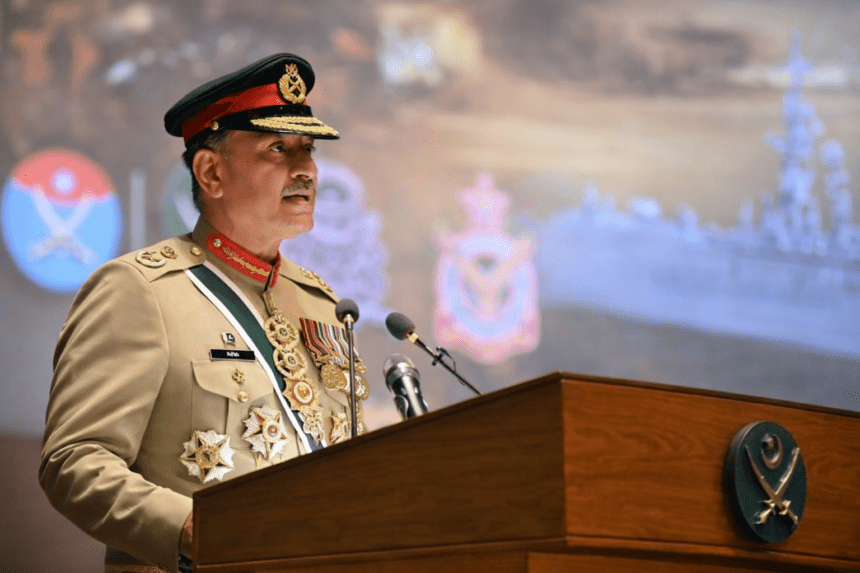
ISLAMABAD: Chief of Defence Forces Field Marshal Syed Asim Munir on Sunday warned that Afghanistan faces a clear choice between standing with Pakistan or allowing what he described as Fitna al Khawarij to continue destabilising the region, stressing that most militant groups infiltrating into Pakistan are made up of Afghan nationals.
Addressing the National Ulema Conference in Islamabad on December 10, the army chief said nearly 70 per cent of militant formations crossing the border from Afghanistan consist of Afghans. Though official details of the address were not released immediately, excerpts of his speech surfaced publicly over the weekend.
Munir said these militant groups have been targeting Pakistani citizens, including innocent children, and alleged that such violence is being carried out with the support of the Afghan Taliban. He termed terrorism a grave threat not only to Pakistan’s security but also to regional stability.
Speaking directly to religious scholars, the chief of defence forces emphasised that in any Islamic state, the authority to declare jihad lies solely with the state, not with individuals or armed groups. He urged unity, discipline and responsible religious leadership to counter extremism and protect society.
Referring to Pakistan’s military standoff with India in May, Munir said the country witnessed what he described as divine help during Operation Bunyan al-Marsous, quoting verses from the Holy Quran to underline his point.
He also spoke about the ideological foundations of Pakistan, drawing a conceptual link between the “State of Tayyaba” and Pakistan, saying both were established on the principles of Kalima Tayyaba during the holy month of Ramadan.
The army chief warned that nations which abandon knowledge, scholarship and the intellectual legacy of their ancestors are destined to decline, urging a renewed focus on education and wisdom.
The National Ulema Conference was attended by religious scholars from all major schools of thought across Pakistan, reflecting a broad-based religious consensus against militancy and violence.