
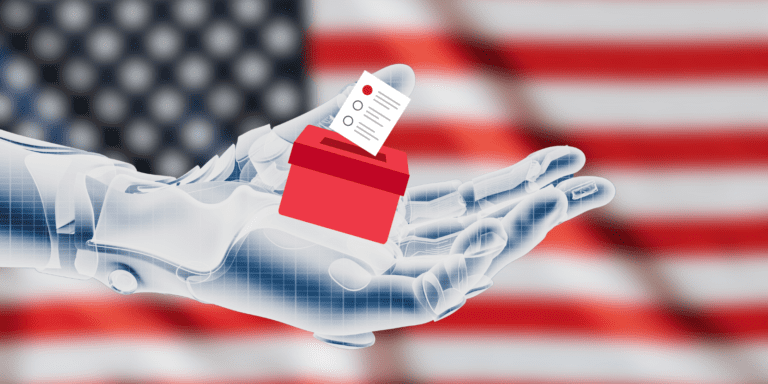
Artificial Intelligence (AI) is no longer just a futuristic concept it is already reshaping how politicians campaign, communicate, and govern. At a recent Ash Center panel discussion titled “AI on the Ballot,” experts and AI developers explored how this technology is influencing political strategy, public trust, and ethics in governance.
AI’s Growing Role in Political Work
The panel, hosted by Bruce Schneier, a security technologist and Harvard lecturer, featured three innovators leading the AI in politics space: Jordan Berger of DonorAtlas, Hilary Lehr of Quiller, and Roger Lin of Legislaide. Each shared how their tools are transforming political operations.
Berger’s DonorAtlas uses AI to help campaigns research and connect with potential donors. “It’s like having 1,000 researchers working for you,” he said, describing how the system has built more than 20 million donor profiles.
Lehr’s Quiller assists political campaigns and nonprofits in drafting personalized messages from fundraising emails to volunteer scripts. “It knows your tone and voice as a candidate and helps you create content much faster,” she explained.
Meanwhile, Lin’s Legislaide helps local governments conduct legislative research and draft policies efficiently. The platform, he said, aims to “democratize policy research” by saving months of work and solving staff shortages in public offices.
Keeping Humans in Control
While AI tools enhance speed, scale, and scope, panelists agreed that human judgment remains central. Lehr emphasized, “Politics will always be human because it’s about people’s values and emotions.”
Lin echoed this, explaining that Legislaide assists lawmakers without replacing them: “It’s still the legislator’s name on the bill.” Lehr added that Quiller always keeps “a human in the loop” before AI-generated content reaches voters.
Trust, Transparency, and Power
Schneier steered the conversation toward trust and ethics critical issues as AI’s influence grows. Berger explained that transparency builds user confidence: “When you hover over any insight in DonorAtlas, you see the data source.” Lehr noted that Quiller earned trust by working closely with early partners and refining its system through feedback.
However, Schneier questioned whether AI makes politics more democratic or simply strengthens those already in power. Berger admitted, “We make the best better,” suggesting that skilled fundraisers gain the most. Lin countered that his platform’s goal is not competition but relief “taking tasks off people’s plates.”
Ethical Boundaries and Bias
Ethics remain a defining challenge. Berger said DonorAtlas refuses clients who conflict with its guiding principles, such as those opposing reproductive rights or supporting looser gun laws. Lehr emphasized Quiller’s strong stance against misinformation, saying, “We won’t use AI to mislead or manipulate our work begins with shared values.”
Lin, however, described AI as “only a tool,” focusing on productivity rather than moral judgment. Schneier challenged this view, suggesting that bias is unavoidable it depends on whether AI is biased toward values like fairness or accuracy.
A New Political Era
The panel concluded that AI is changing politics in ways that go beyond automation. From accelerating campaign research to reshaping legislative processes, AI is rewriting how power, trust, and ethics operate in public life. Yet, as Lehr reminded, the soul of politics remains human driven not by code, but by compassion, values, and conscience.