
The United States is facing a significant measles resurgence, raising concerns after Canada recently lost its measles-free status. Rising cases in the U.S. underscore the consequences of declining childhood vaccination rates, with public health experts warning that the country could soon lose its measles elimination status if trends continue.
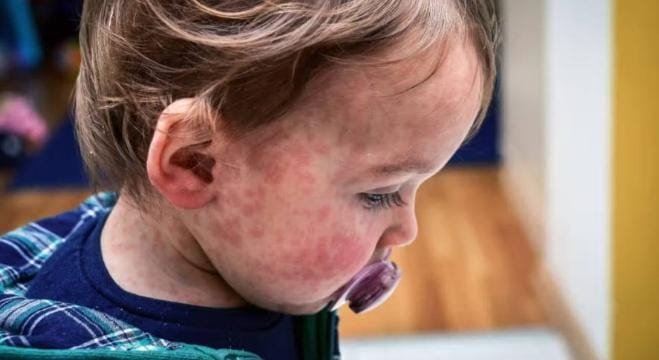
As of November 18, 2025, the Centers for Disease Control and Prevention (CDC) reported 1,753 measles cases, mostly affecting children and young adults under 20. The CDC notes that 92% of cases occur in unvaccinated individuals or those with unknown vaccination status, highlighting the importance of the measles, mumps, and rubella (MMR) vaccine.
Record measles cases and transmission in the U.S.
This year marks the highest number of measles cases since 1992, beginning with a small outbreak in a Mennonite community in West Texas that spread to 43 U.S. jurisdictions. Experts warn that if vaccination rates drop further, measles could become endemic, as predicted by a 2025 study in JAMA, estimating up to 51 million new cases in the next 25 years if coverage falls below 50%.
Dr. William Schaffner, professor of preventive medicine at Vanderbilt University Medical Center, emphasized, “The facts are clear — the measles vaccine is safe and effective.” He added that previously vaccinated individuals remain largely protected, but pockets of under-vaccinated communities are fueling the current outbreak.
Implications if measles becomes endemic
Experts warn that localized outbreaks will continue in communities with low vaccination coverage, potentially affecting adolescents and older children who have never been exposed. Although measles complications increase with age, herd immunity from high vaccination rates in other communities provides partial protection.
Other eliminated diseases, such as polio and diphtheria, could also re-emerge if broader vaccination compliance declines. Past experiences, including a polio case in New York, demonstrate the risk of imported viruses affecting under-vaccinated populations.
Steps to reverse the trend
Health authorities stress the importance of:
- Increasing vaccination awareness in under-vaccinated communities
- Protecting immunocompromised individuals who cannot receive live vaccines
- Engaging families and communities to build trust in vaccines
- Ensuring children and adolescents are fully immunized against measles
Dr. Schaffner concluded that while the situation is alarming, community outreach and adherence to vaccination schedules can prevent a full return to endemic measles in the United States.
Parents and caregivers are urged to consult healthcare providers for guidance on measles vaccination and protection of vulnerable individuals.