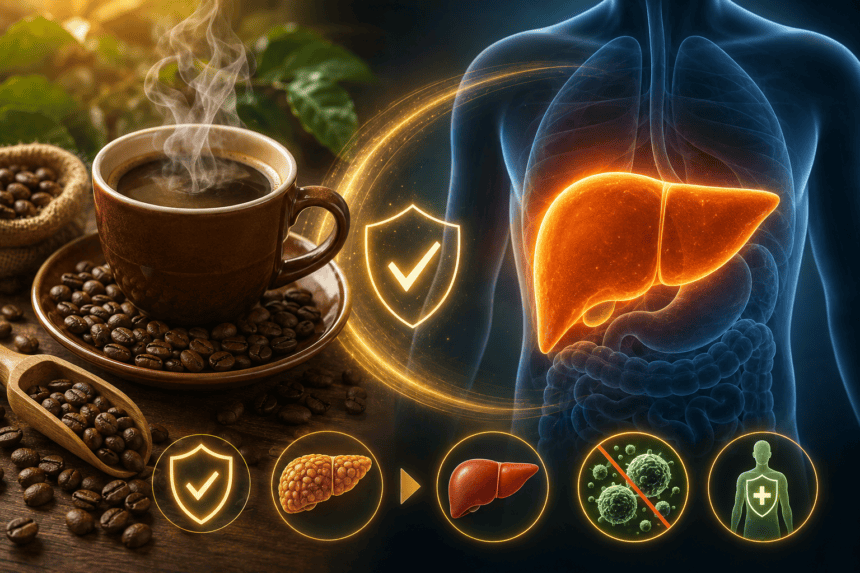
Coffee is one of the world’s most widely consumed beverages, and growing research suggests that drinking it may offer benefits beyond improving alertness. Several studies have linked regular coffee consumption with a lower risk of liver disease, including chronic liver conditions and some serious liver-related complications.
What Does the Research Show?
A large 2025 study published in The Journal of Nutrition followed 170,044 people who did not have liver disease or cancer at the beginning of the study. During a median follow-up of 12.4 years, researchers identified more than 4,000 new cases of chronic liver disease and 853 liver-related events.
The researchers found that people who regularly consumed unsweetened coffee had a lower risk of chronic liver disease compared with people who did not drink coffee. The strongest associations were observed among people drinking moderate amounts rather than simply consuming as much coffee as possible.
Another recent review also found growing evidence connecting coffee consumption with reduced progression of several chronic liver diseases, including metabolic dysfunction-associated steatotic liver disease (MASLD), alcoholic liver disease and chronic viral hepatitis.
Why Might Coffee Benefit the Liver?
Coffee contains numerous biologically active compounds, including caffeine, chlorogenic acids, polyphenols and diterpenes. Researchers believe these compounds may have antioxidant and anti-inflammatory effects and could influence metabolic processes involved in liver health.
Some evidence suggests coffee may also be associated with lower levels of liver fat. Research using liver imaging has found inverse associations between coffee consumption and hepatic fat and iron accumulation.
These effects could be important because excessive liver fat is a major feature of metabolic dysfunction-associated steatotic liver disease, a condition that can progress to inflammation, fibrosis and, in some people, cirrhosis.
Does More Coffee Mean More Protection?
Not necessarily.
The 2025 study found a U-shaped relationship between unsweetened coffee consumption and liver outcomes, meaning the association was not simply stronger with every additional cup. Moderate consumption was associated with lower risks, while drinking excessive amounts should not be considered a way to prevent liver disease.
A separate review suggested that around three to four cups daily may be associated with benefits, but researchers emphasise that more evidence is needed before recommending a specific amount for liver protection.
What About Sugar in Coffee?
How coffee is prepared may matter.
The large 2025 study found that the results for sweetened coffee were less consistent than those for unsweetened coffee. Researchers also observed associations between higher amounts of added sweeteners and liver disease outcomes.
This does not mean that adding a small amount of sugar to coffee automatically causes liver disease. However, regularly consuming highly sweetened coffee can add substantial amounts of sugar and calories to the diet, which may contribute to metabolic problems.
For people interested in the potential health benefits of coffee, plain or lightly sweetened coffee may therefore be a more sensible choice than heavily sweetened coffee drinks.
Can Decaffeinated Coffee Help Too?
Caffeine may not be the only component responsible for coffee’s potential liver benefits.
Research has found associations between both caffeinated and decaffeinated coffee and improved liver outcomes, suggesting that other compounds in coffee may also play a role.
This is important for people who enjoy coffee but are sensitive to caffeine or prefer to avoid it.
Coffee Is Not a Treatment for Liver Disease
Despite encouraging findings, coffee should not be considered a cure or treatment for liver disease.
Most research in this area is observational, meaning it can identify associations but cannot prove that coffee itself directly prevents liver disease. Lifestyle factors, diet, physical activity, body weight and other health conditions can also influence liver health.
People with diagnosed liver disease should follow their healthcare professional’s treatment and dietary advice rather than attempting to manage the condition through coffee consumption alone.
The Bottom Line
Research increasingly suggests that regular, moderate coffee consumption—particularly unsweetened coffee—may be associated with better liver health and a lower risk of chronic liver disease. Coffee contains several compounds that may have antioxidant, anti-inflammatory and metabolic effects.
However, coffee is only one part of a healthy lifestyle. Maintaining a healthy weight, eating a balanced diet, exercising regularly, limiting alcohol and managing conditions such as diabetes can all play important roles in protecting the liver.
For most people who already enjoy coffee, the research provides another reason to enjoy it in moderation—but it is not a reason to start drinking excessive amounts.