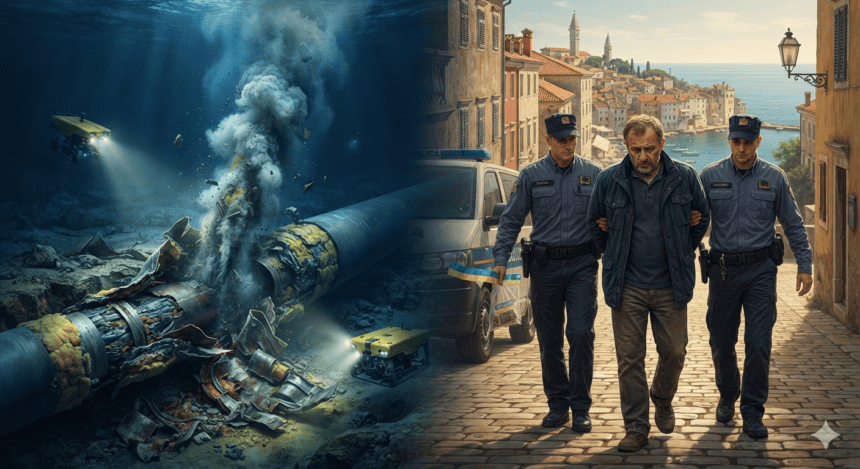
ZAGREB — Croatian police have arrested a Ukrainian national wanted in connection with the 2022 Nord Stream pipeline explosions, marking a shift in the long-running investigation into the subsea sabotage.
The suspect, identified in local media reports as a man with alleged ties to the clandestine operation, was apprehended near the Croatian border. German federal prosecutors, who have spearheaded the multi-year investigation, issued the warrant. Berlin is now expected to seek his extradition to face charges related to the destruction of critical European energy infrastructure.
The September 2022 blasts, which crippled three of the four gas pipelines connecting Russia to Germany, remain one of the most significant acts of industrial sabotage in modern European history. The explosions triggered an immediate energy crisis across the continent and fueled intense geopolitical finger-pointing.
For months, the investigation focused on a yacht, the *Andromeda*, allegedly chartered by a group of divers operating out of Germany. Investigators found traces of military-grade explosives on the vessel, linking the crew to the Baltic Sea site. While initial Western intelligence reports suggested state-level involvement, the focus has increasingly narrowed to an independent group of Ukrainian operatives acting with varying degrees of autonomy.
The Kremlin has repeatedly dismissed the theory of a rogue Ukrainian cell, maintaining that the United States and its allies orchestrated the attack to sever Europe’s reliance on Russian gas. Washington and Kyiv have consistently denied any involvement.
This arrest adds a tangible layer to a case previously defined by speculation and classified intelligence leaks. German authorities have kept a tight lid on the probe, citing the sensitivity of the evidence. However, the detention in Croatia suggests that the dragnet — which has spanned several European countries — is finally closing in on key individuals who were allegedly on board the vessel.
The timing poses a fresh challenge for the German government. Chancellor Olaf Scholz’s administration has navigated a delicate balance, supporting Ukraine’s defense effort while managing the fallout of an attack that targeted German-owned infrastructure.
With the suspect now in custody, the legal process will likely shift to a courtroom in Germany. The primary question remains whether this individual was a lone actor or part of a broader, state-sanctioned network.
The investigation is no longer just about theories. It’s about to enter the evidentiary phase.