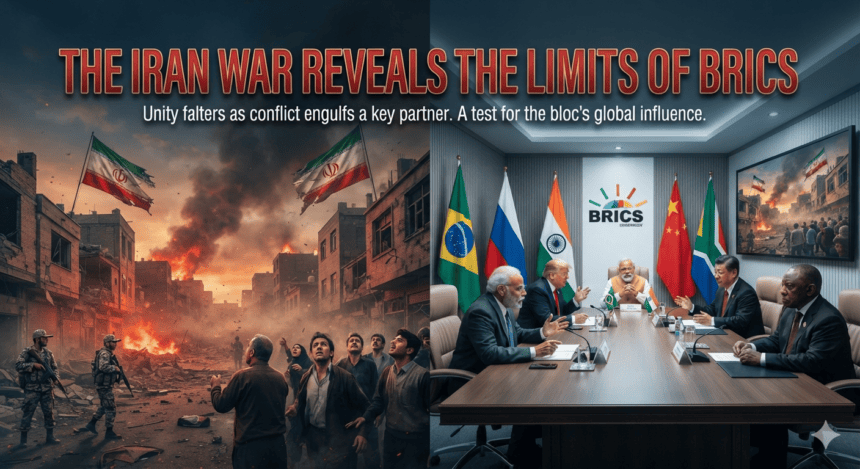
The Middle East is burning, and the world’s most touted alternative power bloc is struggling to find a coherent voice. As Iran and Israel trade direct fire, the BRICS alliance—once branded as the emerging global counterweight to Western influence—has devolved into a collection of disparate national interests, paralyzed by its own internal contradictions.
When the group expanded in January, adding Iran, Egypt, Ethiopia, and the UAE, observers predicted a new, unified geopolitical force. The reality of the last two weeks tells a different story.
China, the bloc’s primary engine, has leaned into a cautious diplomatic mediation role. India, meanwhile, has maintained its “strategic autonomy,” prioritizing its deep-rooted ties with Israel while calling for restraint. Russia, increasingly dependent on Tehran for military hardware, has pivoted to full-throated support of the Iranian regime.
This isn’t a unified front; it’s a diplomatic free-for-all.
The problem lies in the bloc’s fundamental design. BRICS was built on economic cooperation and a shared desire for a multipolar financial system—not a collective security pact. Unlike NATO, there is no Article 5. There is no shared ideology. When the missiles started flying, the “BRICS consensus” evaporated, leaving member states to chase their own survival and regional agendas.
For Beijing, the instability threatens its “Belt and Road” energy supply lines. For New Delhi, the primary concern is the safety of its diaspora and the security of the Chabahar port. For Russia, the conflict is a convenient distraction that draws Western military resources away from Ukraine. These are not aligned goals; they are competing survival strategies.
The expansion has arguably made the group more unwieldy. The inclusion of Iran and the UAE—nations that view each other through a lens of deep-seated historical and religious suspicion—has turned the bloc into a microcosm of the regional tensions it was supposedly meant to bypass.
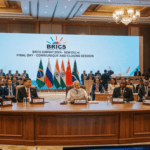
The silence from the BRICS secretariat in Moscow has been deafening. They haven’t issued a unified statement on the conflict because they can’t. To do so would force members to take sides in a regional war that would alienate at least half the bloc’s membership.
As the conflict intensifies, the narrative of BRICS as a cohesive “Global South” alternative is losing its luster. If a bloc cannot find a unified position on the most significant regional war of the decade, its ability to reshape the global order remains more aspirational than functional.
For now, the alliance remains what it has always been: a loose economic forum, ill-equipped and unwilling to navigate the realities of high-stakes global warfare.