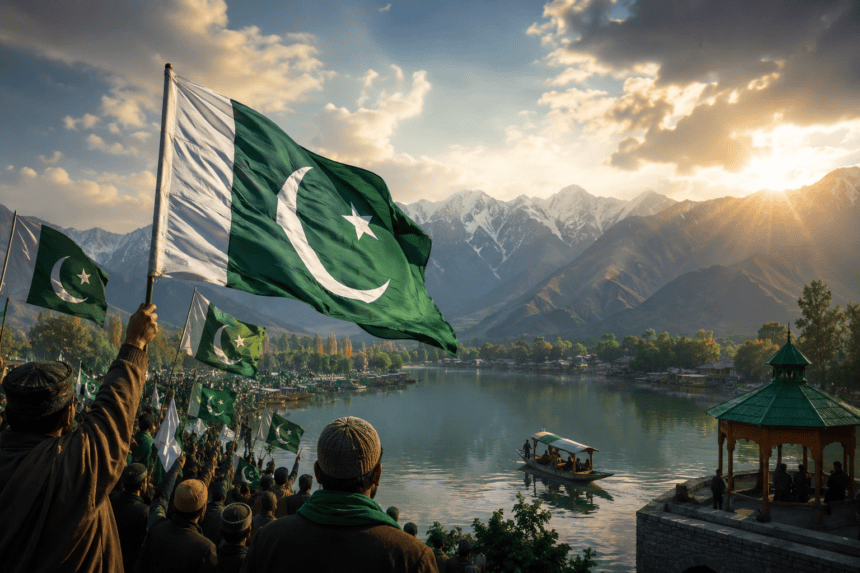
MUZAFFARABAD — Across Azad Kashmir and the occupied territory, residents are marking “Accession to Pakistan Day” today, commemorating the 1947 resolution that saw the All Jammu and Kashmir Muslim Conference vote to align the region with Islamabad.
The day serves as a political cornerstone for Kashmiri activists. While the date is observed annually, this year’s rallies carry a sharper edge as participants protest the legal and demographic shifts imposed since August 2019.
In Muzaffarabad, processions began early this morning. Political leaders, activists, and students filled the streets, carrying banners that underscored the region’s long-standing demand for a plebiscite under United Nations supervision. The atmosphere remains charged, reflecting a deep-seated frustration with the diplomatic stalemate that has left the region’s status unresolved for over seven decades.
The resolution passed on July 19, 1947, remains the legal bedrock for these demonstrations. Protesters argue that the decision of the Kashmiri leadership at the time reflected the aspirations of the majority population—a sentiment they insist has not waned despite the heavy military presence in the valley.
“We aren’t just marking a date on a calendar,” said a local political organizer during a rally in the capital. “We are reminding the world that our foundational decision remains unchanged, regardless of the policies imposed from New Delhi.”
Local authorities have stepped up security measures in sensitive areas, though the events remain largely focused on public speeches and rallies. The government in Azad Kashmir has organized seminars and photo exhibitions to highlight the history of the movement, aiming to keep the narrative alive for a younger generation of Kashmiris.
Analysts point out that while the day reinforces internal unity, the regional geopolitical landscape has shifted significantly. International attention on the Kashmir issue has fluctuated, leading to a sense of isolation among many locals who feel the global community has largely deprioritized the conflict in favor of other emerging crises.
Despite the lack of movement on the diplomatic front, the streets of Muzaffarabad suggest that the appetite for advocacy remains high. For the people gathering today, the focus isn’t on the difficulty of the path ahead, but on maintaining the visibility of a cause they believe the world can no longer afford to ignore.