By: Dr. Sikander Iqbal
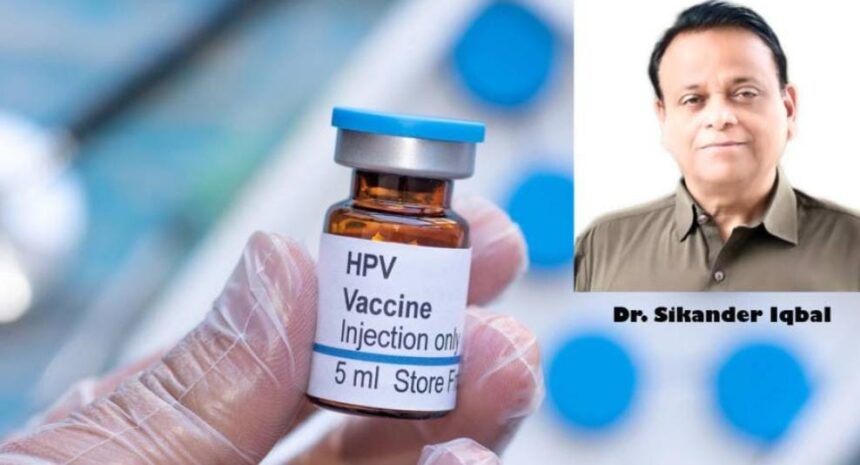
The Sindh Health Department has taken a historic and revolutionary step to protect women’s health by launching a province-wide Human Papilloma Virus (HPV) vaccination campaign from September 15 to 27, 2025. The initiative aims to safeguard millions of girls from the future risk of cervical cancer, one of the leading causes of cancer-related deaths among women.
The burden of cervical cancer
HPV is one of the most common viruses worldwide and the primary cause of cervical cancer. Research indicates that around 99% of cervical cancer cases are linked to HPV infection. Globally, nearly 600,000 new cases of cervical cancer are reported every year, resulting in the deaths of approximately 340,000 women.
Countries with limited vaccination and screening programs are the hardest hit. In Pakistan, about 5,000 women are diagnosed annually, and over 3,000 die due to cervical cancer. It is among the most prevalent cancers affecting women in the country, including in Sindh, where late diagnosis remains a critical challenge.
Sindh’s historic initiative
To address this threat, the Sindh government has decided to provide the HPV vaccine free of cost to girls aged 9 to 14 years, the age group where the vaccine is most effective. Administering the vaccine at this stage ensures long-term protection not only against cervical cancer but also against other HPV-related cancers, including cancers of the throat, mouth, and reproductive organs.
If widely implemented, the campaign could significantly reduce cervical cancer cases in Sindh within the next 15–20 years, saving lives and protecting families from emotional and financial hardship.
Campaign scale and coverage
The HPV vaccination drive will target around 4.1 million girls across Sindh, covering all 30 districts and 1,190 union councils.
A total of 3,611 vaccination teams have been deployed.
Teams are responsible not only for administering vaccines but also for raising awareness and building trust among parents and communities.
Mobile teams have been assigned to reach remote and hard-to-reach areas, ensuring equitable access for girls everywhere.
Vaccinations are being carried out at EPI health facilities, schools, religious seminaries (madrasas), and other organized venues designated as fixed sites.
Safety and monitoring
To address any potential Adverse Events Following Immunization (AEFI), the Provincial Steering Committee for Immunization has strengthened monitoring systems. Trained staff are on standby to provide emergency medical support if required, ensuring public confidence in the campaign’s safety.
Leadership and implementation
Sindh’s Minister for Health & Population, Dr. Azra Fazal Pechuho, is providing direct leadership and personally monitoring every stage of the campaign. Under her guidance, the Health Department has adopted internationally recognized strategies and emphasized clear messaging to ensure community trust and acceptance of the HPV vaccine.
Secretary Health Sindh, Mr. Rehan Iqbal Baloch, has played a vital role in providing logistical support and planning, ensuring vaccination teams reach their sites on time. His leadership introduced real-time monitoring and modern data collection methods, improving transparency and efficiency in the campaign.
Global support and partnerships
The success of this campaign is also supported by strong international partnerships. WHO, UNICEF, and GAVI have provided both financial and technical assistance, including support in vaccine supply, cold chain management, training programs, and global awareness campaigns.
This collaboration reflects the strong partnership between Sindh and global health organizations, strengthening not only the HPV campaign but also future immunization programs.
Public awareness: FAQs about HPV vaccine
Is the HPV vaccine safe?
Yes. It is globally approved and has been administered to millions of girls worldwide.
Can girls continue their daily activities after vaccination?
Absolutely. It does not affect studies, sports, or daily routines.
How many doses are required?
For girls aged 9–14 years, one or two doses are sufficient for long-lasting protection.
A message for parents, guardians, and elders
Ensure your daughters receive this life-saving vaccine.
Remember: it is not just an injection; it is a gift of life.
This campaign is about protecting future generations.
Safeguarding women from cancer is a shared responsibility of society.
Let us unite to vaccinate our daughters and sisters against HPV and work together for a healthier, cancer-free future for Sindh.
Dr. Sikander Iqbal is a public health specialist & chief medical officer at Sindh Government Services Hospital, Karachi and can be reached at drsikander.sacp@yahoo.com