

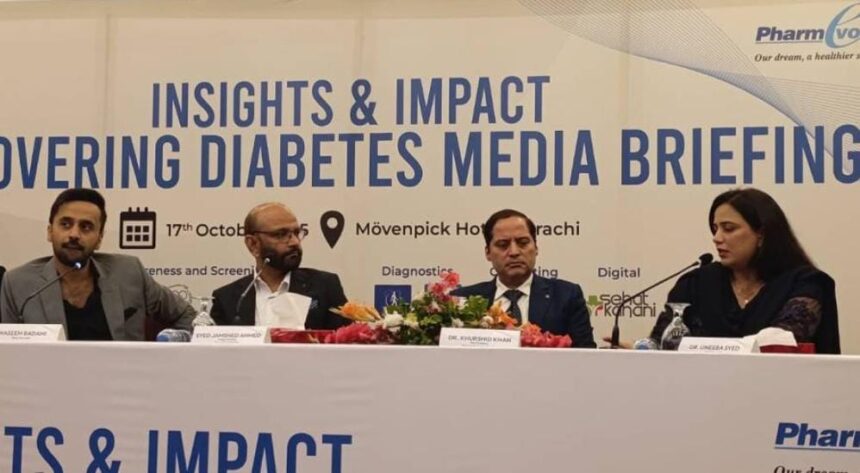
KARACHI: Financial strain, long working hours, double jobs, and poor diets are driving people as young as 20 to 30 years old into undiagnosed type 2 diabetes, endocrinologists warned at the Pakistan Endocrine Society’s recent conference. Many only discover their condition after presenting with blocked heart vessels or uncontrolled hypertension in hospital emergency wards.
Senior diabetologists and internal medicine specialists reported that young patients in their late twenties and early thirties are arriving with multiple coronary blockages. Only after angiography and laboratory tests is it revealed they have been living with silent diabetes and hypertension for years. By then, damage to blood vessels, kidneys, and other organs often has already begun.
At the news briefing, the Discovering Diabetes team released its 2024-25 impact report, revealing that over 8.5 million people have been reached, 9.66 lakh individuals screened for diabetes risk, and 4.63 lakh suspected cases connected to medical advice. Free testing and consultations were offered to more than 3.48 lakh people via screening camps, digital platforms, and doctor linkages nationwide. The scale of outreach, they said, also reflects the alarming rise of undiagnosed diabetes.
Former Pakistan Endocrine Society president Dr Abrar Ahmed emphasized that diabetes has quietly become one of Pakistan’s most serious health threats. “Every fourth Pakistani is diabetic,” he said. He urged that lifestyle change must begin now, criticizing public fascination with weight-loss injections at the expense of basic blood sugar monitoring and diet control.
Syed Jamshed Ahmed, Project Director of Discovering Diabetes, estimated that more than 3.3 crore people in Pakistan are confirmed diabetics, with nearly as many unaware of their condition. Many individuals claimed they could “eat a kilo of gulab jamun without worry” — a mindset he blamed for driving this generation toward disability. He also urged the government to embed diabetes warning messages in mobile caller tunes and broadcast alerts.
Consultant physician Dr Soumya Iqtidar described the medical community as always in “firefighting mode.” She warned that Pakistan now ranks among the highest globally for adult diabetes and obesity. She announced the launch of A to Z diabetes training for general practitioners and a joint course with the International Diabetes Federation (IDF) to equip primary care doctors to tackle the burden.
Former PES president Dr Khurshid A. Khan attributed the rapid spread of type 2 diabetes to inactivity, stress, and high-calorie diets. He lamented that patients who once walked into clinics now arrive in wheelchairs. He linked economic collapse — double shifts, shrinking green spaces, expensive healthy food vs cheap junk food — with the surge in lifestyle diseases.
Haroon Qasim, Managing Director of PharmEvo, called diabetes a “silent killer” and warned Pakistan is trending toward the highest diabetes burden globally. He estimated 2.3 lakh deaths annually stem from diabetes complications. He urged policy shifts such as taxing sugary drinks and incentivizing healthier diets, citing Arab countries as examples.
Ahmer Azam, CEO of Trifit, criticized the mindset that health is optional. He highlighted that Pakistan consumes an enormous amount of bakery goods, while exercise is devalued. Quoting the World Health Organization (WHO) recommendation of 150 minutes of weekly activity, he challenged people who can’t spare that much time to reconsider their priorities. He announced that all Trifit marketing screens would carry diabetes awareness messages for a week and urged doctors to prescribe exercise in writing, as done in some countries.