

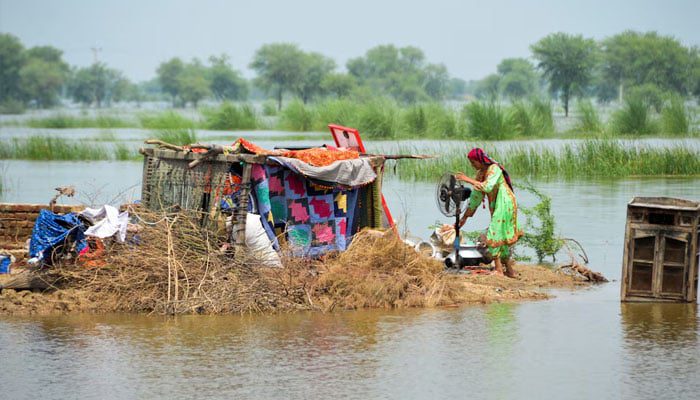
As heavy monsoon rains continue to lash parts of the country, the National Emergencies Operation Center (NEOC) has issued a flood warning, urging vulnerable residents—especially those living near rivers, streams, and nullahs—to remain vigilant and prepare emergency kits for at least five days.
The warning follows a directive by Prime Minister Shehbaz Sharif, who has ordered the National Disaster Management Authority (NDMA), provincial administrations, and rescue agencies to remain on high alert, as the current monsoon spell has already claimed at least 79 lives and injured 140 people across Pakistan.
In its advisory on Monday, the NEOC, operating under the NDMA, emphasized the need for citizens in flood-prone areas to identify safe evacuation routes, move essential items, vehicles, and livestock to higher ground, and stay alert for sudden surges in water levels—especially at night or during intense rainfall.
“Emergency kits should include food, drinking water, and medical supplies sufficient for three to five days,” the NEOC stated.
Rising Risk of Riverine and Flash Flooding
Moderate to heavy rainfall is forecast to continue until July 10, with particular concern for major river catchment areas. There is a heightened risk of both riverine and flash flooding, particularly in northeastern Punjab, Gilgit-Baltistan, and parts of Balochistan.
The Indus, Jhelum, Chenab, and Kabul rivers are all expected to experience increased flows:
Low flood levels are currently being recorded at Tarbela, Kalabagh, and Chashma on the Indus River.
River Chenab is likely to reach low flood levels at Marala and Khanki.
River Kabul at Nowshera and its tributaries may swell, along with Swat and Panjkora rivers.
River Jhelum and its inflows at Mangla Dam are also projected to rise, potentially causing localized flooding.
Nullahs originating from the Pir Panjal range in northeastern Punjab may reach medium flood intensity, while hill torrents in Dera Ghazi Khan and Rajanpur districts could become active, generating high flows.
In Balochistan, seasonal streams in Jhal Magsi, Kachi, Sibi, Qila Saifullah, Zhob, and Musakhel are at risk of surging flows, while in Gilgit-Baltistan, the Hunza and Shigar rivers and their tributaries (including Hispar, Khunjerab, Shimshal, and Hushe) may face flash flooding.
Government Response and Public Awareness
In response to the growing threat, Prime Minister Shehbaz Sharif has ordered the NDMA to:
Maintain close coordination with provincial governments and relevant institutions.
Ensure the functionality of de-watering pumps in urban flood-prone areas.
Direct the Pakistan Telecommunication Authority (PTA) to use all communication platforms to provide accurate, real-time flood alerts.
Identify and publicly share vulnerable areas across different flood intensities to allow for timely evacuations and precautions.
The NDMA has urged citizens to stay informed through official advisories and to download the Pakistan NDMA Disaster Alert App for up-to-date alerts, weather forecasts, and safety guidance.
The Prime Minister expressed concern over the possible release of water from Tarbela Dam, which could escalate flood risks in downstream areas along the Indus River.
All provincial administrations have been instructed to intensify public awareness campaigns and ensure full preparedness for any potential emergency arising from the ongoing monsoon activity.
With the flood threat intensifying, authorities emphasize that community awareness, early action, and inter-agency coordination are critical in preventing further loss of life and mitigating damage.