The drums start before you even reach the main gates. A steady rhythm, rising and falling, pulling visitors toward the heart of Lok Mela as if the festival itself is calling them in. By midday the walkways at Lok Virsa are already packed, and it’s the music — the real, old-world kind — that seems to be driving most of the crowd this year.
Sindh’s cultural night set the tone earlier in the week. Sanam Marvi stepped onto the stage, her voice carrying across the open grounds. A few minutes later Saif Samejo joined in, and suddenly the entire space felt alive. People sang along. Others just stood still, listening. Folk melodies have power like that; they don’t need translation.
Those performances helped lift the festival’s energy, according to one organiser who said the audience response “felt stronger than anything we’ve seen in recent years.” He wasn’t exaggerating. By the time Tufail Khan Sanjrani and Asghar Khoso appeared later that evening, the crowd had doubled, maybe even tripled.
And the music is only half the story.
A few steps away from the stage, artisans from across the country are quietly working behind rows of small wooden stalls. It’s easy to get pulled into conversations here. At one booth a woman from interior Sindh stamps indigo onto fresh Ajrak cloth. Kids lean over the table watching her hands move. Across from her, a woodworker from Chitral carves patterns into a chunk of walnut, pausing now and then to explain the design to curious visitors.
Some items sell quickly. Others are simply admired. But each stall is a reminder that these crafts are more than souvenirs. They’re livelihoods, family skills passed down for generations, pieces of culture that have survived modernisation mostly through festivals like this one.
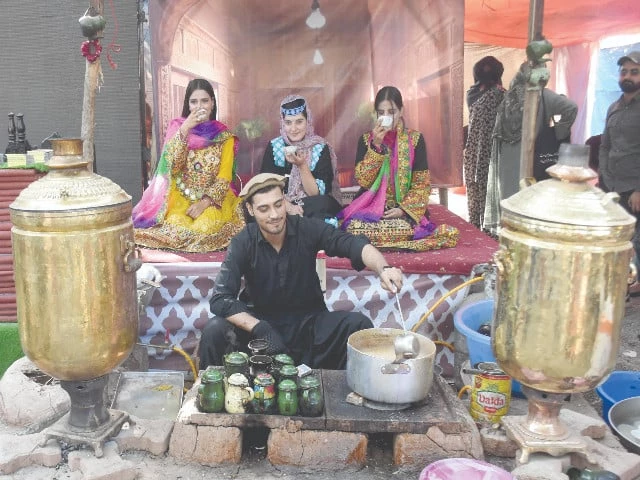
The Sindh Pavilion has turned into a crowd magnet. Bright colours, dancers swaying to dhol beats, embroidery displayed like artwork. Someone nearby joked that it feels like “a festival inside a festival,” and they’re right. It’s loud, joyful and almost impossible to walk past without stopping.
Other provinces are drawing their own clusters of visitors. The Balochistan Pavilion, for instance, feels calmer but just as rich — deep earth tones, handwoven rugs, jewellery with stories attached to every stone. Punjab and Khyber Pakhtunkhwa have leaned into food and live craft demos, which means long lines and a lot of happy faces with plates in hand.
But what really stands out this year is the mix of people pouring through Lok Virsa’s gates. Families, students, tourists, artists, curious first-timers. Many of them came because they saw a clip of the music nights circulating online. Social media may spread the word, but once inside, the festival does the rest.
Lok Mela always promises cultural unity, yet this edition feels more grounded, more spirited. Maybe it’s because artisans are demonstrating their crafts instead of just displaying them. Maybe the musicians are digging deeper into regional traditions. Or maybe Pakistanis, in a year marked by uncertainty, are simply looking for something that feels familiar and rooted.
Whatever the reason, the result is obvious. The melodies, the crafts, the colours, the crowds — everything is pulsing with life.
And the festival still has days to go.