

05 November 2025
Scientists warn the rapid collapse of Antarctica’s Hektoria Glacier could signal a new phase of ice sheet instability and rising sea levels worldwide.
In one of the fastest ice retreats ever recorded, researchers have confirmed that the Hektoria Glacier on the eastern Antarctic Peninsula has collapsed dramatically — losing nearly half of its grounded ice in just two months during late 2022. The discovery has alarmed scientists, who warn that similar glacier systems could rapidly destabilize, accelerating global sea level rise.
According to a new study by the University of Colorado Boulder and published in Nature Geoscience, the Hektoria Glacier retreated by about 25 kilometers between January 2022 and March 2023. Most of this retreat occurred during November and December 2022, when the glacier lost around 50 percent of its ice that was resting on bedrock — a process known as “grounded ice loss.”
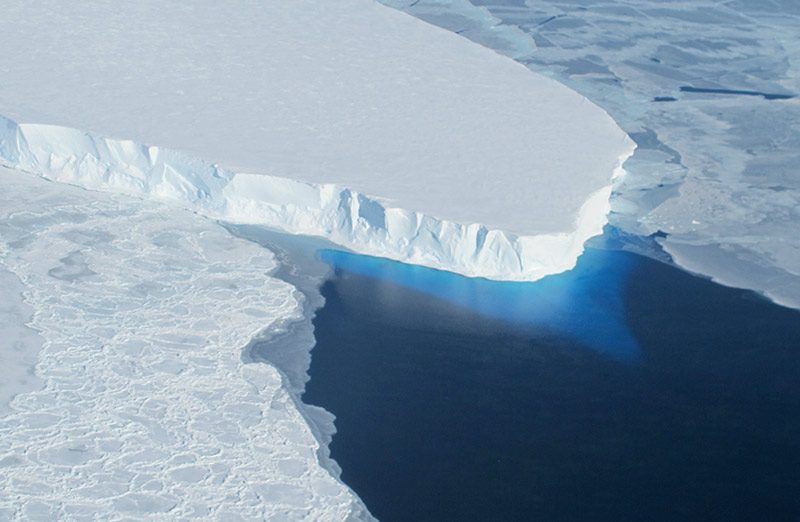
The research team explained that the glacier’s collapse was triggered when warm ocean water eroded its base, causing the ice front to lose contact with the seabed. Once the glacier became buoyant, it began floating and broke apart rapidly. Satellite imagery captured the event, showing the glacier’s front receding faster than any other recorded in Antarctica’s modern history.
Lead author Naomi Ochwat from the Cooperative Institute for Research in Environmental Sciences (CIRES) said the scale and speed of the retreat were “unprecedented.” She added that Hektoria’s location on a flat, below-sea-level bed made it particularly vulnerable once it started to thin.
Scientists now fear that other glaciers along the Antarctic Peninsula, which share similar geological features, could experience comparable collapses if ocean warming continues. Such events could contribute significantly to global sea level rise in the coming decades.
While the loss is localized, experts emphasize that the rapid destabilization of grounded ice serves as a critical warning. It highlights how subtle changes in ocean temperature can trigger large-scale glacial retreat, with potentially irreversible consequences for the planet’s ice systems.