Elon Musk wants SpaceX to hit 10,000 launches a year within five years—a target that would transform the company from a launch provider into something closer to a global airline for outer space.
The goal, shared during recent updates on the Starship program, represents a massive leap from the company’s current record. SpaceX is currently on track to complete roughly 140 missions this year, mostly using its workhorse Falcon 9. To reach Musk’s new milestone, the company would need to average 27 launches every single day.
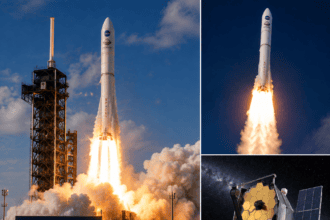
The math behind this surge relies entirely on Starship, the massive, fully reusable rocket currently undergoing testing in South Texas. Unlike the Falcon 9, which requires weeks of refurbishment for its boosters and loses its upper stage every flight, Starship is designed for “airline-like” operations. Musk’s vision is simple: a rocket lands, refuels, and heads back to the pad within hours.
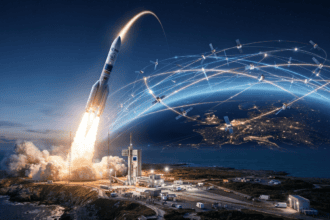
“Starship is the key to making life multi-planetary,” Musk noted during a recent presentation at Starbase. He isn’t just looking at Mars. The 10,000-launch figure includes Earth-to-Earth transport—moving cargo and people across the globe in under an hour—and the massive deployment of the Starlink megaconstellation.
The obstacles aren’t just technical; they’re bureaucratic. SpaceX is already locked in a public feud with the Federal Aviation Administration (FAA) over licensing delays and environmental reviews. Launching 27 times a day would require a total overhaul of how the U.S. manages its airspace. Critics argue the noise, carbon emissions, and potential for debris make such a high-frequency schedule a regulatory nightmare.
SpaceX is already building the infrastructure to bypass some of these hurdles. The company is constructing a second launch tower at Starbase and rapidly expanding its facilities at Cape Canaveral, Florida.
If Musk hits even a fraction of this target, the cost of reaching space will plummet. The industry isn’t just watching to see if Starship can fly; they’re watching to see if Musk can turn the vacuum of space into a high-traffic shipping lane. For now, the pressure is on the FAA and the SpaceX engineering teams to see who blinks first.