First major contact since May standoff comes after India suspended treaty participation in April
ISLAMABAD — In the first significant contact since their May military standoff, India has formally alerted Pakistan of potential flooding risks under the Indus Waters Treaty (IWT). According to official sources, the Indian High Commission in Islamabad shared details on August 24 regarding possible heavy floods in the Tawi River at Jammu.
Pakistani authorities confirmed receiving the communication and subsequently issued flood warnings based on India’s alert.
A Break in the Silence
This marks the first formal exchange under the treaty framework since India suspended its participation in April, following the Pahalgam attack in Indian Illegally Occupied Jammu and Kashmir (IIOJK) that killed 26 people. New Delhi accuses Islamabad of involvement, a charge Pakistan strongly denies. The incident triggered one of the heaviest military confrontations in decades, which only ended after US mediation led to a ceasefire in May.
Despite the suspension, Sunday’s communication signals that both countries remain bound by the practical need to share river-related information, particularly in times of potential disaster.
Indus Waters Treaty at the Core
The 1960 Indus Waters Treaty, brokered by the World Bank, governs the distribution of water from the Indus basin. India was granted control of the eastern rivers — Sutlej, Beas, and Ravi — while Pakistan was given rights over the western rivers — Indus, Jhelum, and Chenab.
The treaty has survived three wars and countless conflicts between the nuclear-armed neighbours. Crucially, it contains no provision for unilateral suspension or withdrawal, though India declared in April that it would keep the treaty “in abeyance” until Pakistan halts what it calls cross-border militancy.
Islamabad has repeatedly called such a move illegal, warning that any diversion of its allocated waters would be considered an “act of war.”
Water Security and Agricultural Concerns
For Pakistan, the Indus system is a lifeline: it supports hydropower generation and provides nearly 80% of irrigation for crops such as wheat, rice, and sugarcane. Farmers’ representatives warn that even minor disruptions could trigger food shortages, higher costs, and price hikes.
“This treaty is the backbone of our agriculture,” said Ghasharib Shaokat, a senior agriculture researcher. “If water flows become uncertain, small farmers will suffer most.”
Khalid Hussain Baath, head of a national farmers’ union, went further, calling India’s suspension an act of “belligerence.” He noted that climate change has already reduced rainfall and snowfall, worsening Pakistan’s water shortages.
Legal Victory in The Hague
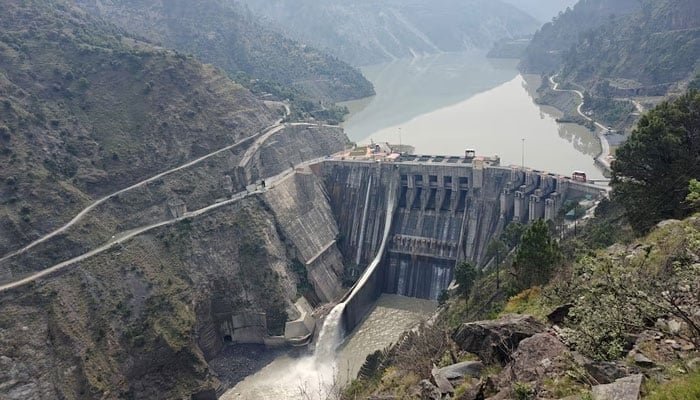
Pakistan recently secured a key ruling from the Permanent Court of Arbitration in The Hague, which in June reaffirmed its jurisdiction over disputes regarding India’s Kishanganga and Ratle hydroelectric projects. The decision countered New Delhi’s claim that suspending the IWT removed international oversight.
“The Court confirmed that unilateral actions cannot strip its competence,” Pakistan’s Foreign Office said, urging India to resume normal treaty functions.
What Next?
While India’s recent flood warning underscores the enduring relevance of the IWT, uncertainty remains over the treaty’s future. With New Delhi signalling that it may pursue projects affecting downstream flows, and Islamabad vowing to resist any such moves, the Indus basin remains both a lifeline and a potential flashpoint.