
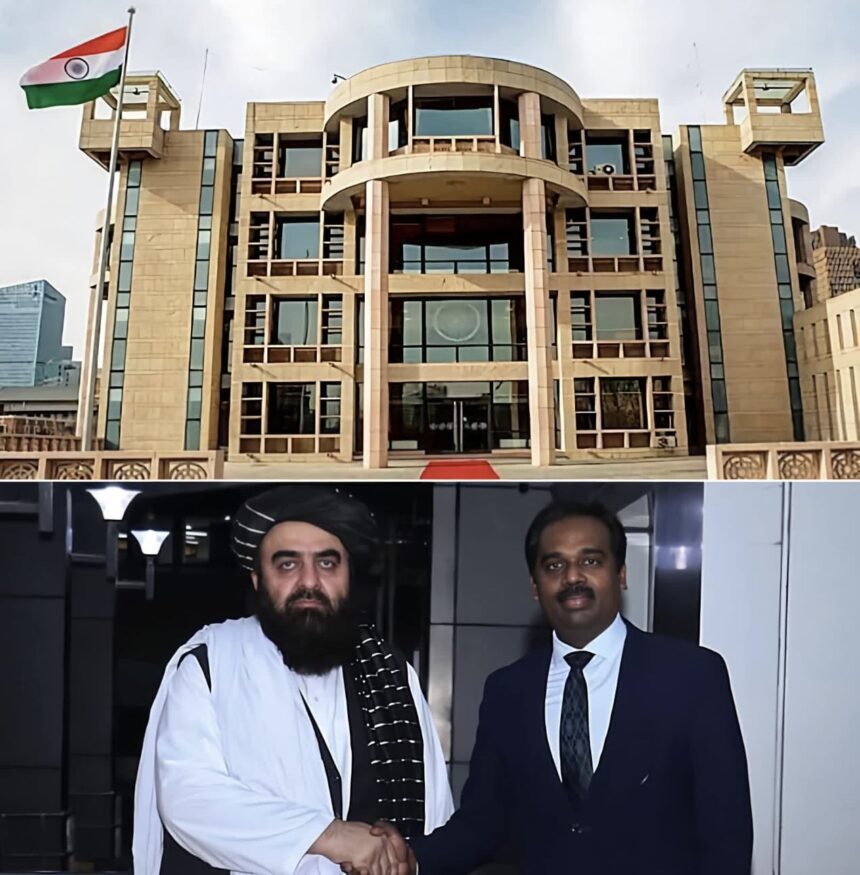
In a significant diplomatic move, India has reopened its embassy in Kabul nearly four years after the Taliban took control of Afghanistan in August 2021. The decision marks a cautious but meaningful step toward re-establishing India’s presence in the war-torn country, signaling a renewed approach to engage with the Taliban regime while prioritizing security and humanitarian concerns.
According to official sources, a limited Indian diplomatic team arrived in Kabul earlier this week to resume consular and developmental operations at the Indian Embassy. The move reportedly follows months of backchannel discussions between Indian officials and representatives of the Taliban’s Foreign Ministry.
An Indian official familiar with the matter said, “Our focus remains on the welfare of the Afghan people and the continuation of humanitarian and development assistance. Reopening the mission is about reconnecting with the Afghan community, not about political recognition.”
This marks the first time since 2021 that Indian diplomats have returned to Kabul. Following the Taliban’s rapid takeover, India had evacuated all its personnel and temporarily shut down the embassy due to security concerns.
Meanwhile, Taliban officials welcomed India’s decision. A spokesperson for the Taliban’s Foreign Ministry said that the move reflects “a positive gesture toward strengthening relations” and that they are ready to provide full security for Indian diplomats and staff.
India has been one of Afghanistan’s largest regional development partners, having invested over $3 billion in infrastructure, education, and healthcare projects over the past two decades. Reopening the embassy is expected to facilitate the resumption of stalled projects and the issuance of medical and student visas that were previously suspended.
Regional analysts see the development as part of New Delhi’s pragmatic shift — balancing its humanitarian commitments with geopolitical realities. “This is India’s way of ensuring it remains relevant in Afghanistan while others, including China and Pakistan, try to expand their influence,” said a South Asia analyst based in New Delhi.
While India continues to refrain from formally recognizing the Taliban government, officials emphasize that maintaining a presence on the ground allows for better coordination on humanitarian aid and security concerns, especially regarding regional terrorism threats.
For now, the reopening of the Indian Embassy in Kabul represents a delicate, strategic comeback — one that seeks to rebuild trust, revive engagement, and reassert India’s role in Afghanistan’s evolving landscape.