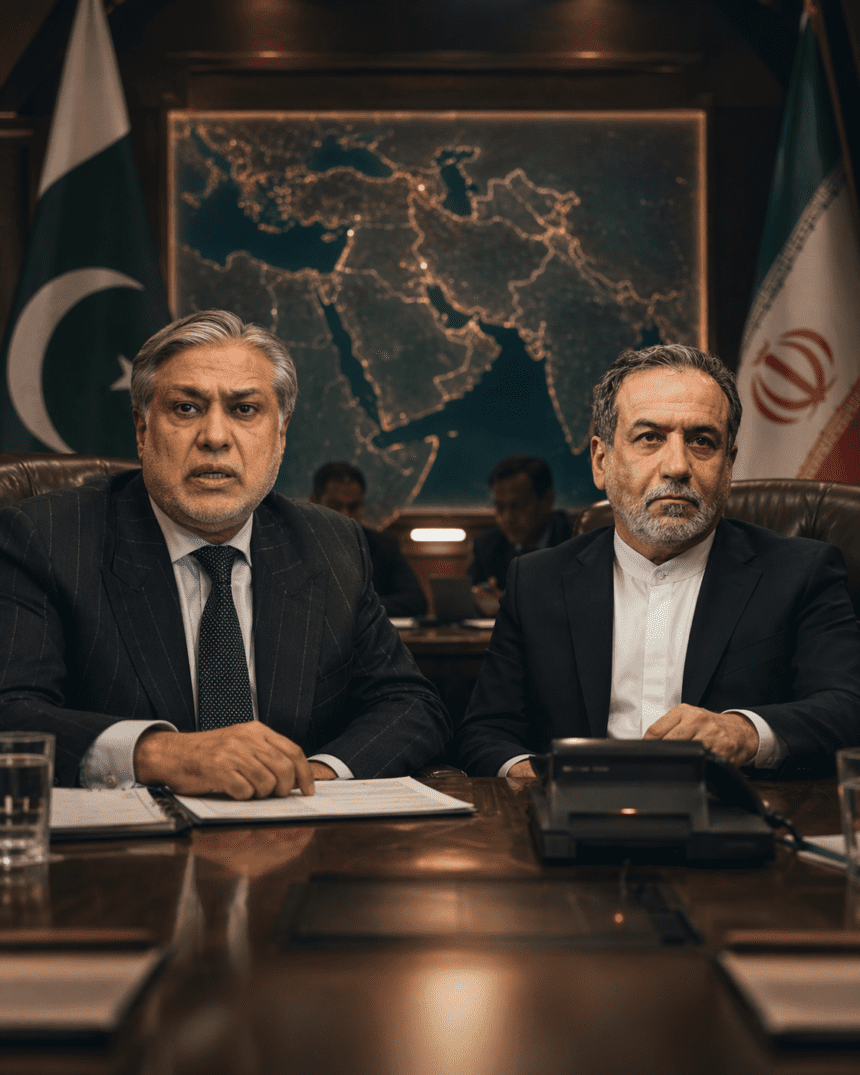
Islamabad: Iran’s Foreign Minister Abbas Araghchi and Pakistan’s Deputy Prime Minister and Foreign Minister Ishaq Dar held a fresh telephone conversation focused on ceasefire efforts and the wider regional situation, as diplomacy around the current Middle East crisis remains in motion. Both the Iranian foreign ministry and Pakistani media reports said the two ministers reviewed recent developments and agreed to stay in close contact.
According to the Iranian foreign ministry’s account, Araghchi and Dar discussed “regional developments and issues related to the ceasefire” during the call. On the Pakistan side, reporting that cited the Foreign Office said Dar stressed that continued dialogue and engagement remain essential to resolving outstanding issues and promoting peace and stability in the region and beyond.
The conversation comes at a delicate moment. Pakistan has been trying to position itself as a diplomatic bridge in the broader crisis, and Dar has in recent days been in touch with several foreign counterparts while publicly backing negotiations over escalation. Pakistani coverage earlier this week described Dar’s outreach as part of a wider push to keep ceasefire efforts from unraveling and to preserve space for further talks.
That larger backdrop matters. Recent reporting says Pakistan hosted earlier rounds of high-level diplomacy between Washington and Tehran in Islamabad on April 11 and 12, 2026, but those talks ended without a breakthrough, leaving the ceasefire fragile and follow-up contacts uncertain. Since then, officials and diplomats have kept working phones busy, trying to stop the situation from slipping back toward a broader confrontation.
Iran’s outreach to Pakistan also appears to be part of a wider regional consultation effort. Reporting published on April 24 said Araghchi had separately contacted Pakistan’s political and military leadership as tensions persisted, underscoring Tehran’s interest in coordinating with neighboring states while ceasefire diplomacy continues.
For Pakistan, the message has been fairly consistent: keep talking, avoid another spiral, and hold open whatever negotiating channel still exists. That does not mean a breakthrough is close. In fact, some recent reporting has cast doubt on the immediate prospects for another formal round of Iran-US talks, even as Pakistan continues encouraging engagement. Still, the Dar-Araghchi call suggests neither side wants the diplomatic track to go cold.
In practical terms, the latest call produced no public announcement of a new agreement or venue. What it did produce was a signal: both Islamabad and Tehran want the ceasefire file to remain active, and both appear keen to keep channels open while the regional picture remains unsettled. For now, that may be the most important outcome.