Pakistan’s vehicle import policy is moving into a tougher, more tightly regulated phase, even as the country opens the door wider under commitments tied to broader IMF-backed reforms. The central shift is this: Islamabad has been moving to relax old curbs on used vehicle imports, but it is pairing that with stricter safety, environmental and inspection requirements rather than simply throwing the market open.
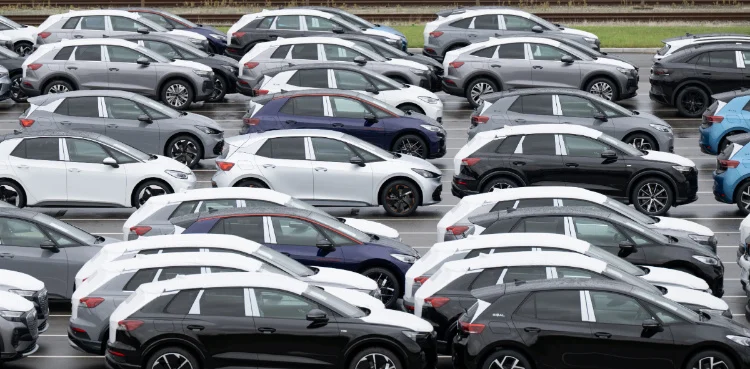
The policy path became clearer when Finance Minister Muhammad Aurangzeb told a parliamentary committee that Pakistan would allow commercial imports of used vehicles up to five years old, with a wider liberalisation roadmap extending from there. Under that plan, the age limit on used vehicle imports was to be removed from July 1, 2026, but quality standards were to stay fully in place. That detail matters. It means the debate is no longer just about whether imports will be allowed, but about what kind of vehicles will be allowed in, and under what testing regime.
Reporting around the IMF angle suggests the Fund’s pressure has focused less on demanding “cheap imports” and more on reducing distortionary barriers in trade policy. Pakistani officials were reported as telling the IMF that they would address non-tariff measures and simplify parts of the export-import policy framework, while putting in place safety and environmental regulations for imported vehicles during FY26. In practice, that has translated into a balancing act: liberalise the market, yes, but keep the rulebook tight.
That balancing act showed up again in September 2025, when the Economic Coordination Committee approved amendments to the Import Policy Order, 2022 to allow commercial imports of used vehicles. Initially, only vehicles less than five years old were to be permitted until June 30, 2026. After that, the age cap would be removed, but commercial imports would remain subject to “strict compliance” with environmental and safety standards. The ECC also approved a 40 percent regulatory duty on commercial imports of used vehicles under five years old, with that extra duty scheduled to taper off gradually by 2029-30.
So the headline tension is real. On one side, the government is easing long-standing restrictions that protected local assemblers and limited consumer choice. On the other, it is building a more formal inspection and compliance system to prevent the imported-vehicle market from becoming chaotic or abuse-prone. Federal Minister Jam Kamal Khan later underlined that point, saying the government wanted pre-shipment and post-shipment inspections through the Engineering Development Board, along with stricter quality controls and changes to import schemes used by overseas Pakistanis, which officials say have been vulnerable to misuse.
That misuse issue has hovered over the policy for a while. Pakistan’s used-car market has long depended partly on baggage, gift and transfer-of-residence schemes rather than a fully open commercial channel. Dawn reported that the baggage route currently permits cars up to three years old, and other vehicles up to five years old, under certain conditions, while the finance minister also said a minimum overseas stay of 700 days would be required to qualify for exemptions under the baggage scheme. Those details show why the government is now trying to separate genuine personal imports from commercial exploitation dressed up as something else.
For consumers, the promise is obvious: more supply, more competition and, at least in theory, better options for middle-class buyers priced out of the local market. Supporters of liberalisation have argued that older imported vehicles can still be cheaper than newer locally assembled models, especially in small-engine categories. Industry critics, though, see the same plan as a direct threat to local assemblers and parts vendors, who have warned that a surge in used imports could eat into domestic production and weaken localisation efforts.
That’s why the phrase “strict rules” is doing so much work here. Pakistan is not just being nudged toward allowing more imported vehicles; it is being pushed toward a new regulatory structure where age limits matter less and compliance matters more. Safety checks, environmental standards, inspection systems and anti-misuse controls are becoming the gatekeepers. Frankly, that may be the only way the government can sell the reform politically: open the market a bit, but make it clear that not every used vehicle gets a free pass.
The broader economic backdrop also explains the urgency. Pakistan remains under an IMF programme framework, with the Fund’s country page showing continued review activity tied to the Extended Fund Facility and related arrangements. In that setting, tariff reform, import rationalisation and the cleanup of non-tariff restrictions are not isolated auto-sector tweaks; they’re part of a larger attempt to remake how trade policy works. The car market just happens to be one of the most politically sensitive places where that fight is playing out.