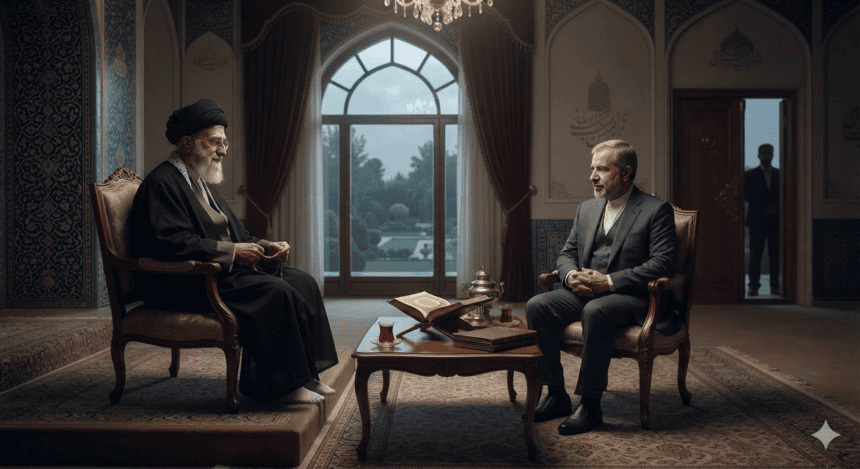
TEHRAN — President Masoud Pezeshkian met with Supreme Leader Ayatollah Ali Khamenei on Tuesday, a high-stakes sit-down that signals internal maneuvering as the Islamic Republic faces mounting regional tensions and domestic economic pressure.
These meetings are rarely publicized in detail, but the optics here matter. Pezeshkian, a reformist-leaning president who took office in July, is attempting to navigate a political landscape dominated by hardline institutions.
The discussion, according to official state media reports, centered on “current developments.” For observers in Tehran, that phrasing covers everything from the administration’s struggle to stabilize a plummeting rial to the shadow war with Israel that has pushed the country toward a direct confrontation.
Pezeshkian has spent his first months in office pushing for a pragmatic approach to sanctions relief. He’s argued that Iran cannot afford to remain isolated while its economy crumbles. Yet, he lacks control over the Islamic Revolutionary Guard Corps (IRGC) and the intelligence apparatus—both of which report directly to Khamenei.
The Supreme Leader’s posture in these meetings often determines the limits of the president’s power. If Pezeshkian is seeking a mandate to pursue back-channel diplomacy or soften his rhetoric on regional proxies, he needs more than a polite nod from the 85-year-old leader. He needs an explicit green light.
Analysts suggest the timing of this meeting isn’t coincidental. With the regional security situation shifting rapidly and the threat of broader conflict looming, the establishment is looking to project a sense of internal unity.
“The president is walking a tightrope,” said a political analyst familiar with Iranian state media, who spoke on condition of anonymity. “He knows he can’t govern without the Leader’s backing, but he also knows the current economic trajectory is unsustainable. This meeting is an attempt to align those two realities.”
Whether the president walked away with a shift in policy or merely a directive to stay the course remains the question. For now, the administration has returned to its daily rhythm, but the nature of the closed-door conversation likely dictates the tone of Iran’s next diplomatic move.