

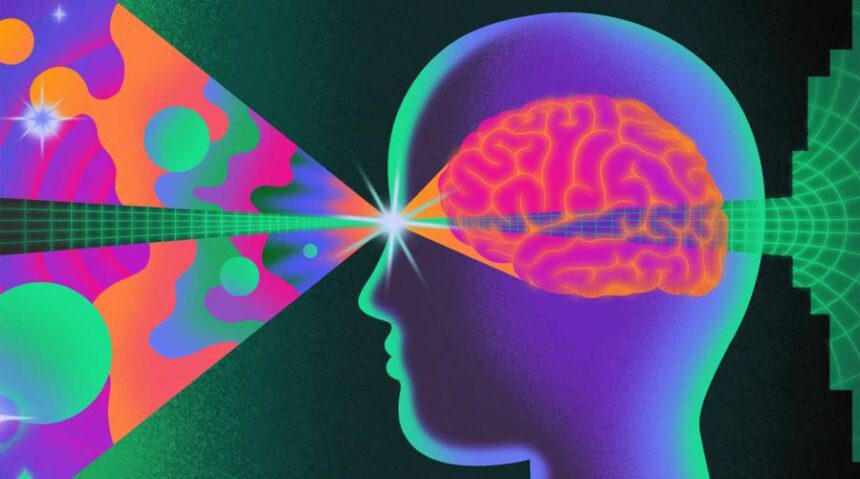
What if the smarter the tools we use, the less we think for ourselves?
That’s the unsettling question emerging from a growing body of research exploring how artificial intelligence (AI) may be changing the human brain — and our ability to think critically.
Since the release of ChatGPT in November 2022, AI tools have become an invisible extension of our daily routines. From students using chatbots to write essays to professionals relying on AI assistants for analysis, the convenience of automation is undeniable. But scientists now warn that this dependence could come at a cost.
MIT’s “Your Brain on ChatGPT” study raises eyebrows
Media scientists at the Massachusetts Institute of Technology (MIT) recently released a study titled “Your Brain on ChatGPT: Accumulation of Cognitive Debt When Using an AI Assistant for Essay Writing Task.”
The experiment tracked 54 adults who wrote essays over four months using either ChatGPT, traditional search engines, or no digital help at all.
For the first three sessions, researchers found that participants who relied on ChatGPT showed lower electrical brain activity compared to those who used only their own thinking. Even those using search engines displayed less neural engagement than the “brain-only” group.
When the groups switched — those who had used ChatGPT were suddenly asked to write without it — their brain connectivity dropped further, alongside a reduced sense of ownership and weaker recall of their own writing.
Although small and preliminary, the study signals what MIT researchers call “cognitive debt” — a subtle erosion of independent thought that builds up the more we outsource thinking to machines.
Cognitive offloading: convenience at a mental cost
Other studies from 2024 and 2025 echo the same concern. They describe a growing phenomenon called “cognitive offloading” — where our brains stop working as hard because we rely on AI to do the heavy lifting.
Researchers found that people who use AI more frequently, especially young adults aged 17 to 25, may experience:
Reduced critical thinking and mental engagement
- Decline in memory retention and attention span
- Difficulty applying knowledge to new situations
- Lower confidence in personal decision-making
One 2025 study highlighted a shift from active to passive critical thinking, explaining that frequent AI use transforms how we approach learning and problem-solving:
- Recall and comprehension: From information gathering to information verification
- Application: From problem-solving to AI response integration
- Analysis and evaluation: From executing tasks to overseeing AI-generated work
Over time, this pattern could train the brain to think less — while giving the illusion of greater productivity.
Can AI be used without losing your edge?
Experts caution that the solution isn’t to abandon AI, but to use it intentionally. When used wisely, AI can still enhance creativity, spark new ideas, and accelerate learning.
To stay mentally sharp, psychologists suggest asking yourself key questions:
- Are you using AI to verify rather than understand information?
- Do you let AI solve problems instead of trying first on your own?
- Are you relying on AI to evaluate ideas rather than forming your own conclusions?
Recognizing when your thinking becomes passive can help you stay in control of your cognition — rather than letting algorithms do it for you.
The bottom line
Emerging evidence suggests that overreliance on AI could dull critical thinking, creativity, and memory, but researchers stress that these effects are still being studied. Current data shows correlation, not causation.
AI isn’t inherently harmful — it’s how we use it that matters. The real danger lies in forgetting to think while our digital assistants do it for us.
In the end, the smartest way to use AI may be to let it challenge your ideas — not replace them.