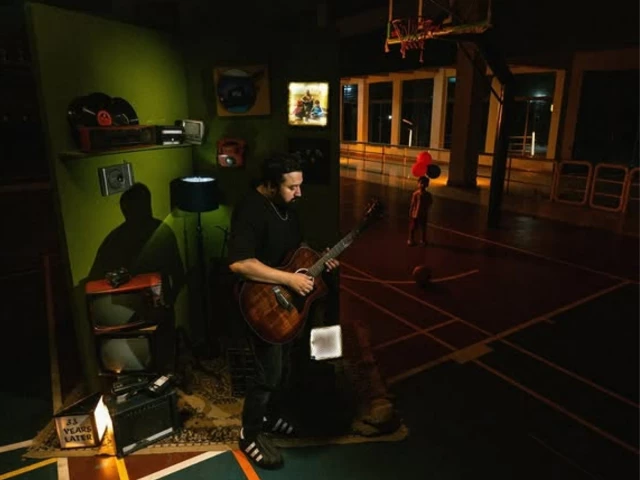
Jokhay is back. After months of scattered hints, studio clips, and fan speculation, the Karachi-based producer has released his second album, 33 Years Later — a project that pulls together some of the biggest names in Pakistani hip-hop and marks a major step in his evolution as an artist.
The album features eight tracks, each carrying Jokhay’s distinctive production style: atmospheric, sharp, and built around rhythms that feel both familiar and entirely his own. Spring Time, Meter 100, Way Back, Enemies, Hypnotise, Left Behind, Far Away, and Rock Bottom make up the lineup — the last of which already arrived with a music video featuring Talha Anjum and Asim Azhar.
A heavyweight guest list
Part of the excitement around this album comes from who’s on it.
Jokhay has brought together a roster that spans nearly every corner of the local rap scene: Talha Anjum, Talha Yunus, Jani, Rap Demon, JJ47, Jevin Gill, Shareh, and Asim Azhar.
It’s a cross-section of artists who rarely appear in the same project, and that mix alone gives 33 Years Later the feel of a moment — something listeners will revisit to understand where the scene stood in 2025.
Jokhay produced, mixed, and mastered the entire album himself, keeping the creative process tight. The cover art comes from Umair and Omer Khan, adding a visual identity that matches the album’s introspective tone.
Why this album matters right now
Jokhay isn’t new to the spotlight. Khana Badosh and several collaborative EPs earned him a loyal fan base, but this record arrives with a different kind of weight.
It feels like a summary and a reset — a chance to show how far he has come and what direction he wants Pakistani hip-hop to take next.
The buzz online is already loud. Fans have been waiting for a cohesive project that brings together the energy of Karachi’s underground with the polish of mainstream collaborators. 33 Years Later seems designed to bridge that gap.
What listeners can expect
The album moves across moods: some tracks hit with heavy beats and sharp verses, others drift into softer, melodic territory. It’s the kind of project that doesn’t stay in one lane, which has been Jokhay’s signature from the beginning.
Whether the album reshapes the direction of local hip-hop remains to be seen, but one thing is clear: Jokhay has positioned himself as one of the most influential producers in the scene. 33 Years Later only strengthens that claim.