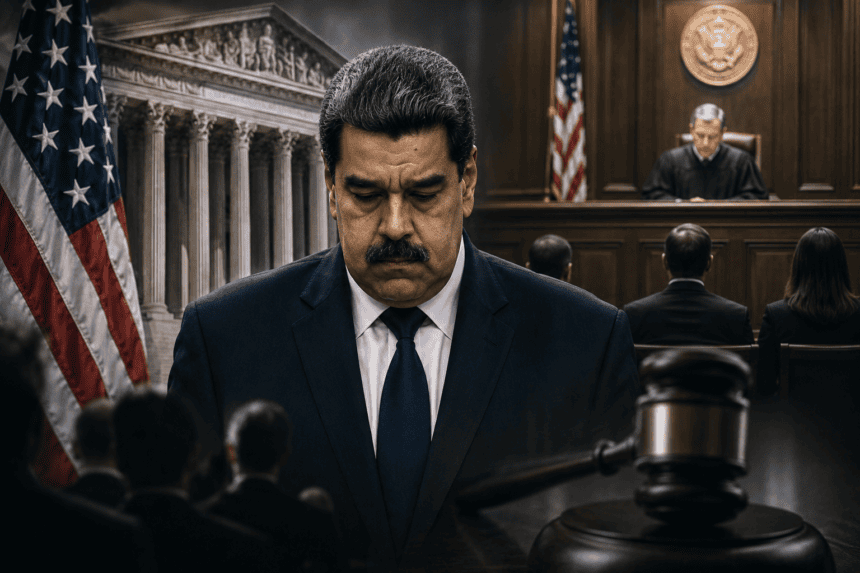
Nicolás Maduro is not physically present in a Washington courtroom, but his grip on power in Caracas is being dismantled one legal filing at a time. Federal prosecutors are pushing ahead with a series of high-stakes motions that aim to tighten the financial vice on the Venezuelan leadership, testing the limits of U.S. jurisdictional reach over a sitting—albeit contested—head of state.
The core of the current legal maneuvering involves the U.S. Department of Justice’s ongoing effort to forfeit assets tied to what authorities describe as a multi-billion dollar money-laundering scheme. Prosecutors are targeting luxury properties and offshore accounts they claim were siphoned from Venezuela’s state-owned oil company, PDVSA, to enrich Maduro’s inner circle.
For the White House, these court proceedings serve a dual purpose. They act as a pressure valve against a regime the U.S. refuses to recognize following the disputed July presidential election, while simultaneously providing a roadmap of the regime’s illicit financial architecture.
“The evidence presented in these filings isn’t just about seizing bank accounts,” said one former federal prosecutor familiar with the case. “It’s about mapping the veins of a kleptocracy. Every time a new document hits the docket, it makes it harder for Maduro’s associates to move money anywhere in the Western financial system.”
The regime in Caracas has dismissed the proceedings as “lawfare,” a term Maduro’s legal team frequently uses to characterize U.S. sanctions and indictments as political theater rather than legitimate criminal justice. Yet, the strategy is biting. As the U.S. Treasury continues to coordinate with the Justice Department, the ability for Venezuelan officials to conduct international transactions is evaporating.
The timing of these filings is no coincidence. With international observers pointing to widespread irregularities in the latest vote, the U.S. is signaling that its patience with diplomatic backchannels is nearing an end. By moving the fight into the courtroom, the administration is bypassing the gridlock of traditional diplomacy to target the regime’s only remaining lifeline: its access to global capital.
Whether these court actions will force a change in Caracas remains the central question for policymakers. History suggests that regimes of this nature rarely fold under the weight of civil forfeiture alone. However, the legal net is tightening, and for those surrounding Maduro, the risk of being caught in the tangle grows with every court session.