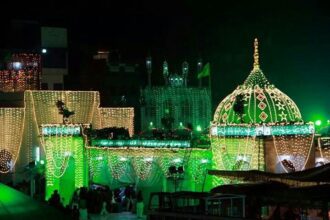

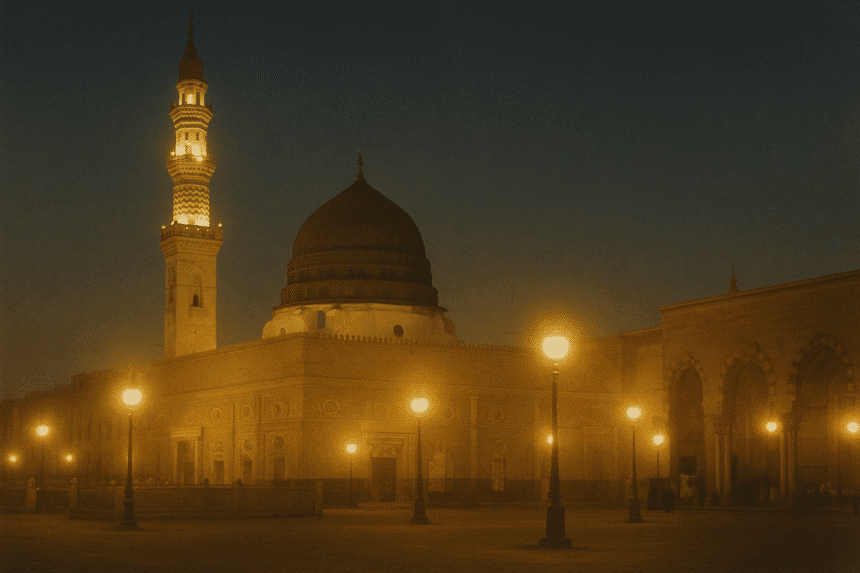
Masjid Al Nabwi holds a remarkable place in history as it became the first location in Arabia to receive electricity in 1909. The sacred mosque’s illumination marked a significant step in technological progress for the region, symbolizing the perfect harmony between faith and innovation.
Masjid Al Nabwi in Madinah achieved a groundbreaking milestone in 1909 when it became the first site in the Arabian Peninsula to be illuminated with electric lights. This historic transformation took place under the reign of Ottoman Sultan Abdul Hamid II, marking a new era where spiritual heritage and modern technology came together in harmony.
Before electricity, the Prophet’s Mosque was lit using oil lamps and palm-fiber torches that required daily maintenance. The introduction of electric lighting not only brightened the mosque but also reshaped the nightly atmosphere of Madinah, filling it with amazement and gratitude. Historical records state that the lights were officially switched on during the month of Sha’ban 1326 AH, corresponding to March 14, 1909 — a date remembered as a symbol of progress in the Islamic world.
At that time, a small power generator was installed specifically to supply electricity to the mosque, making it one of the earliest examples of localized power use in the region. Witnesses described the first night of illumination as an unforgettable sight, with the glowing mosque becoming a beacon of both faith and innovation.
This event is widely regarded as a turning point in the modernization of the Arabian Peninsula, proving that advancement in technology could coexist with deep religious devotion. More than a century later, Masjid Al Nabwi continues to stand as a shining symbol of spiritual enlightenment and technological progress, welcoming millions of visitors who marvel at its legacy.