
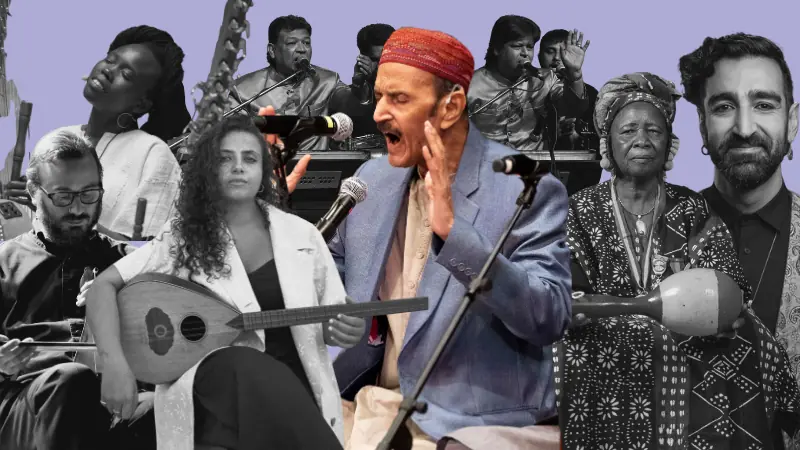
The 2025 Aga Khan Music Awards have announced their 11 global laureates, celebrating exceptional artists who are not just preserving traditional sounds, but reimagining them for a changing world. Among this year’s distinguished winners is Pakistan’s Ustad Naseeruddin Saami, a living custodian of one of South Asia’s oldest musical traditions.
A global celebration of living traditions
The Aga Khan Music Awards — established by His Highness the Aga Khan — honour musicians, composers, educators, and cultural leaders who use music to strengthen communities and sustain heritage. This year’s winners come from across Asia, Africa, Europe, and the Middle East, showcasing the remarkable diversity of Muslim and cross-cultural musical legacies.
The awards ceremony will take place later this month, celebrating the laureates’ contributions with performances and exhibitions that reflect the intersection of tradition, innovation, and humanity.
Pakistan’s Ustad Naseeruddin Saami: Guardian of ancient sound
Representing Pakistan with immense pride, Ustad Naseeruddin Saami received the Patron’s Award, recognising his lifelong devotion to preserving the khayal tradition — a centuries-old form of Hindustani classical singing that traces its lineage back to the legendary poet-musician Amir Khusrau.
Often called the last master of a vanishing art, Saami has dedicated his life to a microtonal system encompassing 49 distinct notes, a tonal complexity unmatched in South Asian classical music. His students and sons now carry forward this rare tradition through the Saami Brothers Ensemble, blending history and contemporary appeal.
Speaking to Pakistani media in earlier interviews, Ustad Saami said, “Music is not just entertainment — it’s remembrance, it’s prayer, it’s the search for purity of sound.”
His recognition by the Aga Khan Music Awards highlights Pakistan’s contribution to the world’s intangible cultural heritage and acknowledges his decades-long effort to preserve musical forms that are at risk of disappearing.
Other laureates shaping the sound of resilience and renewal
Alongside Ustad Saami, ten other remarkable musicians and ensembles were honoured this year:
-
Naseer & Nazeer Ahmed Khan Warsi (India) – Co-recipients of the Patron’s Award, representing India’s famed Warsi qawwal lineage, also descending from Amir Khusrau’s disciples. Their music continues to bridge devotion, poetry, and classical artistry.
-
Mariam Bagayoko (Mali) – Honoured with the Lifetime Achievement Award for her decades of work preserving Mali’s musical traditions and mentoring young women artists.
-
Sahba Aminikia (Iran/USA) – A composer and founder of the Flying Carpet Festival, which brings music to refugee children affected by war in Syria and Türkiye. His work merges art and humanitarianism.
-
Senny Camara (Senegal) – A singer and kora player whose music speaks of gender equality, environmental awareness, and social change in West Africa.
-
Kamilya Jubran (Palestine/France) – A pioneering oud player and vocalist who fuses Arabic traditions with experimental music, inspiring a new generation of artists in exile.
-
Farah Kaddour (Lebanon) – Recognised for revitalising the buzuq and using music to empower displaced communities through cultural education and performance.
-
Kyriakos Kalaidzidis (Greece) – A composer and scholar exploring the shared musical histories of the Islamic and Mediterranean worlds, fostering cross-cultural understanding through sound.
-
Hamid El Kasri (Morocco) – One of the world’s most renowned Gnawa musicians, known for his deep, spiritual performances that have captivated audiences far beyond Morocco’s borders.
-
Qalali Folk Band (Bahrain) – Awarded for their role in preserving the Gulf’s pearl-diving songs — a heritage that connects generations of Bahraini seafarers through rhythm and chant.
The 11th laureate, to be confirmed by the Aga Khan Trust for Culture, represents another unique expression of living musical heritage within the Islamic world.
Music as a force for connection
This year’s awards underscore a powerful message: music is more than art — it’s a bridge. Whether reviving ancient instruments, blending genres, or using melody to heal trauma, these laureates remind us that sound is a universal language of resilience.
According to the Aga Khan Trust for Culture, the awards aim to “honour exceptional creativity, uphold cultural continuity, and inspire future generations.” Since their launch in 2019, the programme has supported hundreds of artists and educators across the globe.
For Pakistan, Ustad Saami’s recognition isn’t just a personal milestone — it’s a nod to a legacy stretching back 800 years. It’s a reminder that in a world rushing toward modernity, there are still voices committed to carrying the old songs forward, one breath at a time.