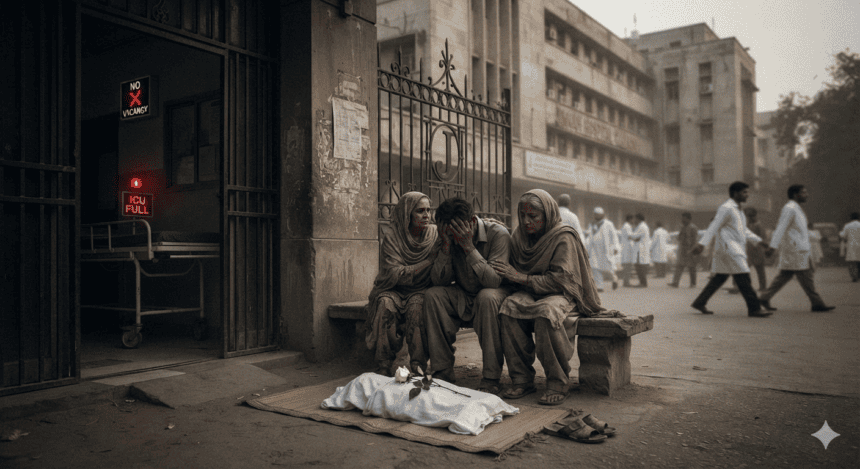
A 28-year-old woman and her newborn died Tuesday at Jinnah Postgraduate Medical Centre (JPMC) in Karachi after hospital staff allegedly denied them a bed in the intensive care unit. The incident, which sparked a protest by grieving relatives, has once again exposed the fragile state of public healthcare in Pakistan’s largest city.
The woman arrived at the hospital’s emergency department in critical condition. Her family claims they were moved between wards for several hours before being told the ICU was full. Despite the medical emergency, doctors reportedly informed the family that no ventilator or specialized care space was available, forcing them to wait in a general ward where the mother and child succumbed to their complications.
“We begged them to find space, to move someone else, to do anything,” the woman’s brother told reporters outside the hospital. “They just kept telling us to wait. My sister died waiting for a bed that never opened up.”
JPMC officials have not yet issued a formal statement regarding the specific triage protocols followed during the incident. However, sources within the administration suggest the hospital has been operating at over-capacity for weeks, with elective surgeries pushed back to accommodate a surge in emergency admissions.
The lack of ICU beds in Karachi’s public sector has become a recurring crisis. While the provincial government frequently announces budget increases for healthcare, the ground reality remains stagnant: patients are regularly turned away from major facilities like JPMC and Civil Hospital due to equipment shortages and staffing gaps.
For the families caught in these systemic failures, the loss is absolute. An inquiry into the incident is expected, though such investigations rarely lead to long-term policy changes or improved infrastructure.
The bodies were handed over to the family late Tuesday night, leaving behind a trail of questions about basic accountability in a system where a lack of resources is increasingly becoming a death sentence.