
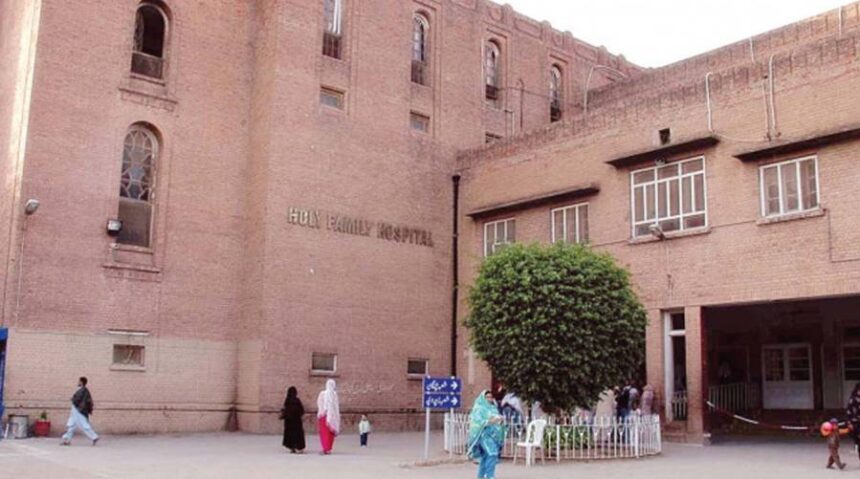
RAWALPINDI: A deeply troubling incident has emerged from Holy Family Hospital, Rawalpindi, where a two-day-old newborn was mistakenly declared dead and issued a death certificate—only to later be found alive and rushed onto life support. The incident has triggered an official inquiry and renewed concerns over medical protocols in public hospitals.
According to hospital sources, the newborn—born to a woman identified as Rubina—was in critical condition shortly after birth. In what officials have described as a premature and erroneous assessment, attending doctors declared the infant deceased and issued a formal death certificate, stating that the body had been handed over to the family.
Signs of life discovered after certificate issued
Shortly after the documentation was completed, hospital staff noticed faint signs of life in the newborn. The infant was immediately transferred to a ventilator in the neonatal care unit, where medical teams are currently providing intensive treatment.
The death certificate reportedly carries the stamp and signature of Dr. Tayyaba Sadaf, prompting administrative scrutiny into the circumstances surrounding the declaration.
Hospital administration orders formal inquiry
Following the incident, Medical Superintendent Dr. Akhtar Mahmood Malik constituted an inquiry committee to investigate the lapse. The committee is being led by Dr. Hina Sattar, Head of the Pediatrics Department at Holy Family Hospital.
Dr. Malik stated that strict disciplinary action would be taken against those found responsible once the inquiry is completed. He emphasized that the incident would be examined in detail to determine whether established medical and verification protocols were followed before issuing the death certificate.
Rare medical condition cited
Hospital officials explained that the newborn was suffering from Lazarus syndrome, a rare medical phenomenon in which breathing and vital signs become extremely faint, sometimes leading to a false assumption of death if not carefully monitored.
Medical experts caution that such cases underscore the importance of multi-step verification, prolonged observation, and senior consultation—particularly in neonatal and critical care settings.
Broader concerns over patient safety
The incident has sparked serious questions about patient safety, medical oversight, and accountability in public sector hospitals. Healthcare professionals and patient rights advocates have called for stricter checks, enhanced training, and clear protocols to prevent similar occurrences in the future.
As the inquiry proceeds, the case stands as a sobering reminder of the life-and-death consequences of procedural lapses in healthcare systems already under strain.