

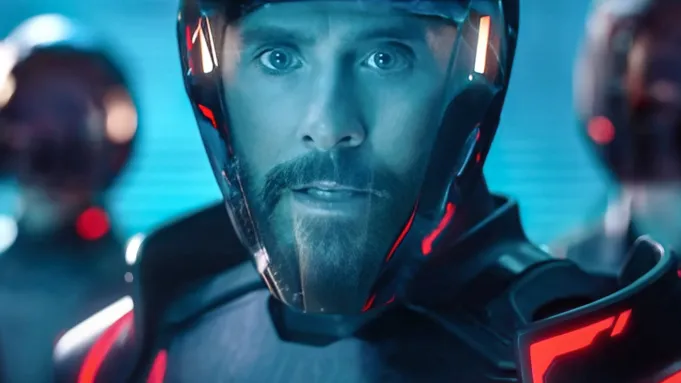
Hollywood watchers are wondering if Tron: Ares might be less a resurgence and more a swan song for Jared Leto’s run as a marquee franchise lead. The film’s box office performance, coupled with critical response and heavy backlash, has ignited speculation that studios may think twice before banking a blockbuster on Leto again.
Underwhelming Return to the Grid
Tron: Ares, released on October 10, 2025, opened to $33.5 million in its debut — a figure far below expectations for a high-profile studio sci-fi tentpole. With a reported production budget around $180 million, plus marketing, the returns so far have been disappointing by nearly every metric.
Critics and audiences gave lukewarm reviews: many praised the visuals but criticized the thin narrative and overreliance on familiar franchise tropes. That mismatch between expectation and execution only amplified scrutiny of Leto’s role — both in front of the camera and behind the scene
Framing Leto as the Fall Guy
Media trades have not shied from assigning blame. After Ares’s weak opening, some commentators laid much of the responsibility on Leto, portraying the film as his personal passion project that failed to land. In an article titled “No One Asked for This Reboot: ‘Tron’ May Mark End of Jared Leto’s Franchise-Leading Days,” The Hollywood Reporter implies that Leto’s star power may have been overestimated by studios.
These reports highlight how Leto had been elevated to a producer role and allegedly influenced shifts in narrative focus to favor his character, Ares — arguably at the expense of a more balanced, ensemble-driven story.
Observers note that Hollywood often builds narratives about an actor’s “rise and fall” — and in this case, Leto may be serving as a convenient scapegoat for a film facing many structural issues beyond one performer’s control.
The Bigger Picture: Is Leto’s Franchise Appeal Cooling?
If Tron: Ares does mark a turning point, it wouldn’t be the first time a star known for gravitas in genre films found themselves losing ground with studios. Audiences increasingly demand balance: spectacle, yes — but also substance, fresh storytelling, and identifiable stakes.
Leto’s past work in franchise settings has had mixed success. Some of his high-profile roles have been praised more for ambition than cohesion. As Tron: Ares struggles, the question becomes whether studios will see Leto as a bankable lead or a high-risk investment.
Critics suggest that the problem isn’t just Leto — it’s that Tron: Ares had to carry a heavy burden of expectations, nostalgia, and spectacle. The film’s underperformance may discourage studios from greenlighting future films that rely chiefly on star power without stronger narrative support.
What’s Next for Leto and Tron
It’s unlikely that Ares will kill the Tron franchise outright — Disney may attempt to course-correct, perhaps focus more on ensemble characters or new creative directors. But for Leto himself, the pressure is now intense.
If Ares fails to recoup its investment, his leverage in future big-budget projects could diminish. Casting directors, studios, and financiers may hesitate, especially in genres where return on investment is volatile.
That said, actors have staged comebacks before. Whether Leto does depends on his next choice — a stronger script, a gamble in independent cinema, or a genre revival that proves he still draws audiences.
In Hollywood’s shifting landscape, Tron: Ares might just be remembered as the film that tested how much “Jared Leto” is still a safe bet.