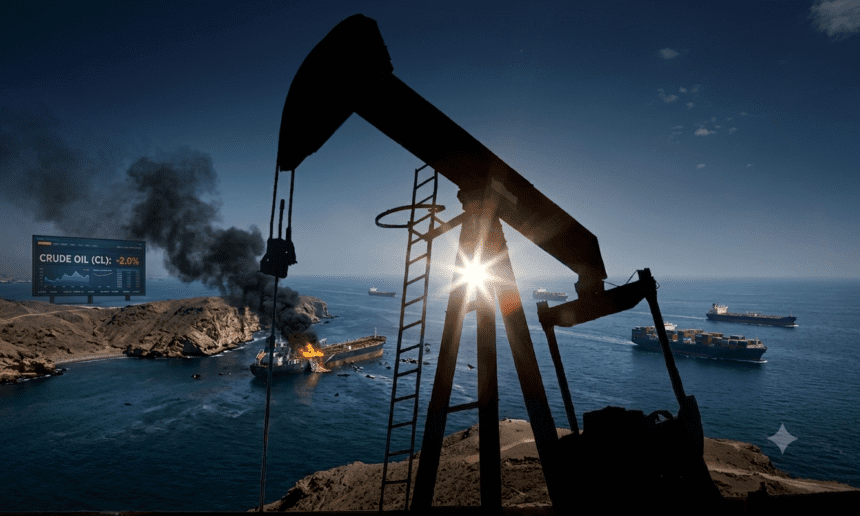
LONDON: Global oil prices declined by around 2% after crude shipments through the Strait of Hormuz resumed, easing concerns over potential disruptions to one of the world’s busiest energy trade routes despite reports of a vessel being struck near Oman.
The market reacted positively as shipping activity through the strategic waterway continued without major interruptions, reducing fears of a prolonged supply disruption. The Strait of Hormuz handles a significant portion of the world’s crude oil exports, making any threat to maritime traffic a key driver of global energy prices.
Although a commercial vessel reportedly sustained damage near the coast of Oman, shipping companies and regional authorities indicated that oil transportation through the strait remained operational. The continuation of tanker movements reassured investors and helped ease the geopolitical risk premium that had recently pushed oil prices higher.
Energy analysts said the decline in prices reflected improved market confidence that global oil supplies would remain stable despite ongoing tensions in the Middle East. However, they cautioned that any further security incidents in the region could quickly reverse the downward trend in oil markets.
Experts noted that geopolitical developments around the Strait of Hormuz continue to be closely monitored by traders, as the waterway is responsible for transporting nearly one-fifth of global oil consumption. Any significant disruption could affect fuel prices and global inflation.
Market participants are expected to remain focused on regional security developments, shipping activity, and supply-demand fundamentals as they assess the outlook for international crude oil prices.