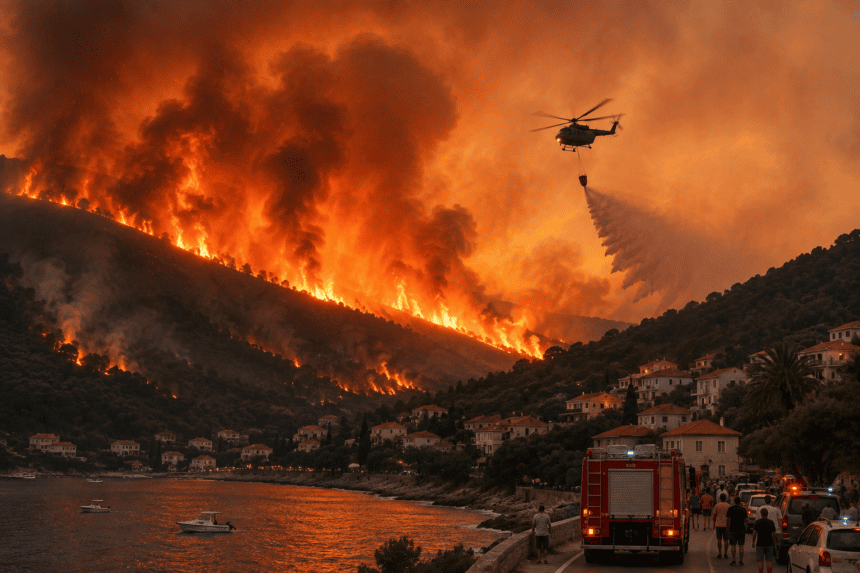
A massive wildfire ripped through a residential area near the Croatian coast late Tuesday, leaving at least one person dead and dozens injured. Emergency crews are still battling the blaze, which forced hundreds of residents and tourists to flee their homes and hotels as flames jumped across main roads.
The fire broke out in the late afternoon near Šibenik, fueled by high temperatures and gale-force winds that turned small patches of brush into a wall of fire within minutes. By nightfall, the fire had reached the outskirts of the town, trapping several people in their vehicles while others scrambled to reach the shoreline.
Local emergency services confirmed the death of one individual found near a burned-out vehicle on the outskirts of the town. At least 30 others, including several firefighters, were treated for smoke inhalation and minor burns at regional hospitals. The regional medical director described the situation as “chaotic” during the peak of the evacuation, noting that ambulances struggled to navigate blocked coastal roads.
The intensity of the fire took many by surprise. While the region is accustomed to summer heat, the rapid progression of this blaze caught fire crews off guard. Local residents reported that the fire moved “faster than a man could run,” cutting off power lines and plunging parts of the coast into darkness as the blaze intensified.
Prime Minister Andrej Plenković arrived on the scene early Wednesday, pledging federal support to bolster the local firefighting efforts. He faced tough questions from residents who lost property, with many pointing to the lack of early warning sirens in the immediate vicinity of the fire’s origin.
Croatia’s firefighting command has deployed water-bombing aircraft to the area, though high winds have grounded flights intermittently throughout the morning. With the heatwave showing no signs of breaking, the government has declared a state of emergency for the county.
As the sun rises over the charred landscape, the focus has shifted from containment to cooling down hot spots. Thousands remain without electricity, and for those who lost their homes, the recovery process remains a distant prospect.