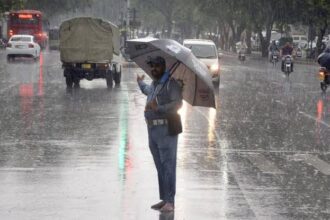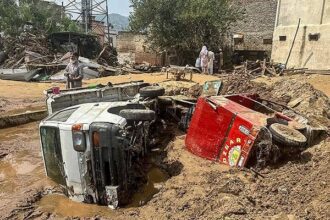


ISLAMABAD – The death toll from the ongoing monsoon catastrophe in Pakistan has climbed to 660, with torrential rains unleashing floods, landslides, and cloudbursts across the country. The calamity has left widespread destruction in its wake, destroying homes, infrastructure, and livelihoods.
According to the National Disaster Management Authority (NDMA), Khyber Pakhtunkhwa (KP) has borne the brunt of the devastation, reporting 392 deaths, including the worst-hit district of Buner, where 217 lives were lost. Punjab followed with 164 fatalities, while 32 deaths were confirmed in Gilgit-Baltistan (GB), 29 in Sindh, 20 in Balochistan, 15 in Azad Jammu and Kashmir (AJK), and eight in Islamabad Capital Territory (ICT).
The disaster has not only claimed lives but also left 935 people injured, the majority in Punjab (582). Thousands of homes have been damaged or reduced to rubble, with KP, GB, and AJK recording the highest housing losses.
Tragedy in Khyber Pakhtunkhwa
Entire communities in KP have been cut off after roads and bridges collapsed under the relentless floods. In Swabi, a sudden cloudburst swept away at least 15 people and several vehicles, while in Peshawar, continuous downpours triggered urban flooding and the collapse of a school wall.
In Buner, schools were destroyed, leaving scattered books and broken furniture across the mud-filled streets. Emergency workers reported that half of Bishunai village in Pir Baba was wiped out by torrents of water and stones. At least 60 residents remain missing, feared buried under boulders.
Adding to the tragedy, a Pakistan Army helicopter conducting rescue operations crashed on Friday, killing five officers, including two pilots. Funerals for the fallen were held on Sunday.
Punjab and Other Regions Hit Hard
Punjab also faced severe destruction as heavy downpours flooded Chakwal, Kallar Kahar, Rajanpur, and Khushab. Rising water levels in Nala Ghabir and Nala Kaha Sultan cut off access roads, while low-lying villages in Taunsa and Dera Ghazi Khan were submerged by swelling Indus River waters.
In AJK, tragedy struck when Dr. Gul Lala, a lecturer at Poonch University, was swept away in Rawalakot. Separately, five people lost their lives after their vehicle plunged into the Neelum River.
Gilgit-Baltistan recorded significant housing damage, with hundreds of homes destroyed by flash floods and landslides. In Athmuqam’s Grace Valley, search and rescue operations were hindered by continuous rainfall.
Relief and Government Response
With the scale of the destruction growing daily, both provincial and federal authorities have pledged urgent relief efforts.
KP Chief Minister Ali Amin Gandapur announced a solidarity donation drive, contributing one month’s salary himself, while lawmakers, cabinet members, and government officers pledged portions of their pay. A special PDMA relief fund has been set up to ensure transparency in financial aid.
Prime Minister Shehbaz Sharif, chairing a high-level meeting, directed federal agencies to intensify relief operations in KP, GB, and AJK. He emphasized that “in this hour of calamity, there is no federal or provincial divide,” adding that rehabilitation of flood victims was a national responsibility.
Federal Information Minister Attaullah Tarar and Energy Minister Musadik Malik assured that relief teams were on the ground, working to reopen blocked roads and restore electricity. The army has also deployed personnel to clear debris, rescue stranded citizens, and deliver medical supplies.
A Nation in Mourning, A Call for Unity
The 2025 monsoon season has once again exposed Pakistan’s vulnerability to climate-driven disasters, echoing the devastation of previous years. For now, families across KP and Punjab mourn their loved ones, while relief teams race against time to reach remote villages still cut off by floods.
As Prime Minister Sharif noted, “Helping our distressed Pakistani brothers and sisters is not charity—it is our duty as a nation.”