ISLAMABAD: Pakistan has warned that trade and economic cooperation with Afghanistan will remain suspended unless the Afghan Taliban take firm and verifiable action against TTP and other anti Pakistan groups operating from Afghan soil.
The strong message came after the Taliban regime told Afghan traders to look for markets other than Pakistan and said it would not be responsible for any fallout if they continued business ties with Islamabad.
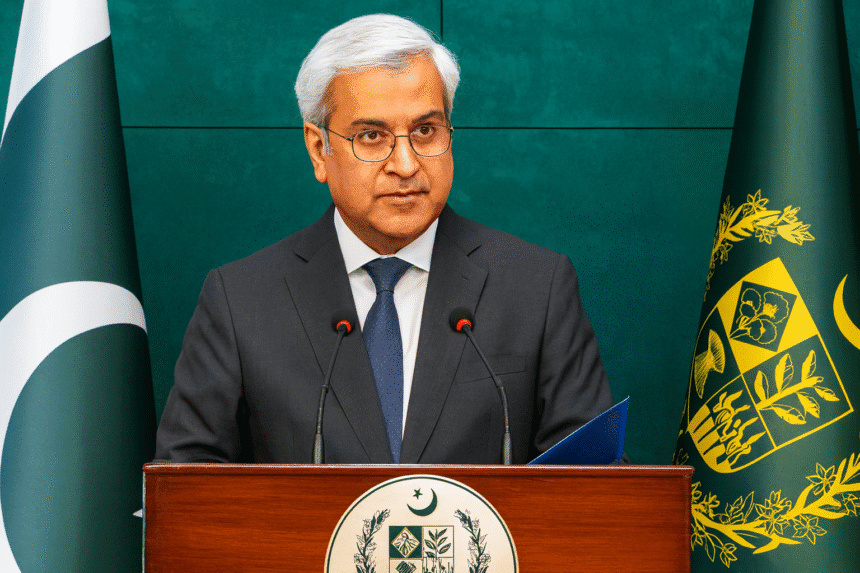
Foreign Office Spokesperson Tahir Hussain Andrabi, speaking at the weekly briefing, said Pakistan supports regional connectivity and open trade, but “these goals cannot move forward while cross border terrorism continues.”
He noted that Pakistan has offered several trade concessions to Afghanistan, yet the Taliban authorities have not responded with similar goodwill. Instead, he said, they continue to “harbour and support” the very groups attacking Pakistan.
Andrabi stressed that human lives are more important than any trade agreement. “Transit and trade with Afghanistan are only possible if the Taliban government takes clear action against anti-Pakistan militants,” he said.
The spokesperson directly linked recent attacks in Islamabad and Wana to Afghan-based networks. He said both incidents carried “visible Afghan fingerprints,” noting that the Islamabad suicide bomber was an Afghan national.
He warned that Pakistan will take every necessary measure to protect its citizens and will continue to hold Kabul accountable for terrorists using Afghan territory.
While Pakistan is still engaging the Taliban regime through dialogue, Andrabi cautioned that talks cannot continue without real movement against the TTP and Fitnah-Al-Khawaraj (FaK). He rejected Taliban claims of being “helpless,” saying the group cannot claim full control of Afghanistan while permitting attacks on Pakistan.
Andrabi also highlighted Pakistan’s strong cooperation with the United States in defense, trade, economy, and development sectors.
On India, he reiterated Pakistan’s stance on the Indus Waters Treaty, calling New Delhi’s refusal to join Neutral Expert proceedings “illegal.” He also criticized India’s response to the Red Fort blast, accusing it of using terrorism as a political distraction and targeting Muslims, especially Kashmiris, under a repressive campaign.