
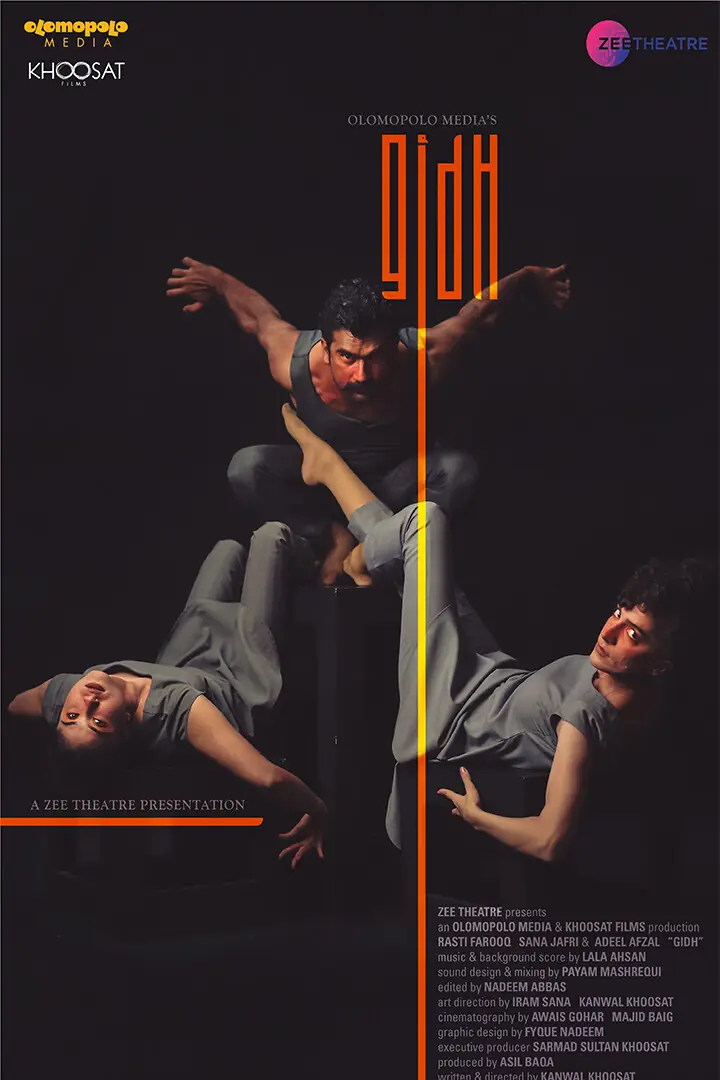
The Pakistani teleplay Gidh is heading to Canada for its world premiere at the Mosaic International South Asian Film Festival (MISAFF), marking another strong international moment for Pakistan’s growing independent screen industry. The festival runs from 24 to 30 November 2025 in Mississauga, Ontario, and Gidh is one of the key South Asian selections drawing early attention.
The project comes from writer and director Kanwal Khoosat, with production by Sarmad Khoosat and Asil Baqa, a trio known for pushing Pakistani storytelling into more daring, character-driven territory. Lead roles are played by Rasti Farooq, whose performance in Joyland earned global praise, and Sana Jafri, recognized for her understated but powerful screen presence.
Gidh revolves around a young married woman, alone in her home, who receives a quiet knock on the door. Standing outside is a younger woman from a fictional place called Naqshapur. What begins as a polite tea invitation slowly shifts into something far stranger. The conversation tightens. Secrets edge their way into the room. And by the time the tea cools, the audience understands why the title alludes to a vulture circling its prey.
MISAFF’s programming has long championed socially aware and artistically ambitious South Asian storytelling, so Gidh’s inclusion signals confidence in both its craft and its thematic weight. The festival’s current lineup leans heavily into psychological drama, women-led narratives, and politically textured stories, placing Gidh in the right company.
For Pakistan, the moment matters. International premieres for teleplays are still rare, and this selection reflects how non-feature formats from Pakistan are beginning to travel farther. The Khoosat family has previously taken projects to festival circuits, but Gidh stands out for its intimate scale: two women, one living room, and a conversation that feels like it could tip over at any second.
People within the Pakistani industry have been waiting to see where the project would land. Its trailer, which dropped quietly online, drew attention for its tension and minimalism: no dramatic music, no sweeping camera moves, just two actors navigating an unsettling emotional landscape. The festival spotlight now gives the team the chance to present the teleplay to a global audience, with the possibility of distribution conversations soon after.
There’s also curiosity about how audiences in the Canadian South Asian diaspora will respond. Pakistani narratives often pull strong attendance at MISAFF, and Gidh brings a different flavour—less conventional, more enigmatic. And maybe that’s exactly why it was chosen.
As the festival approaches, details about the exact screening date and any Q&A sessions are expected soon. What is clear for now is that Gidh has already done what only a handful of Pakistani teleplays manage: it has stepped onto an international stage, quietly but confidently, ready to see how far its wings can carry it.