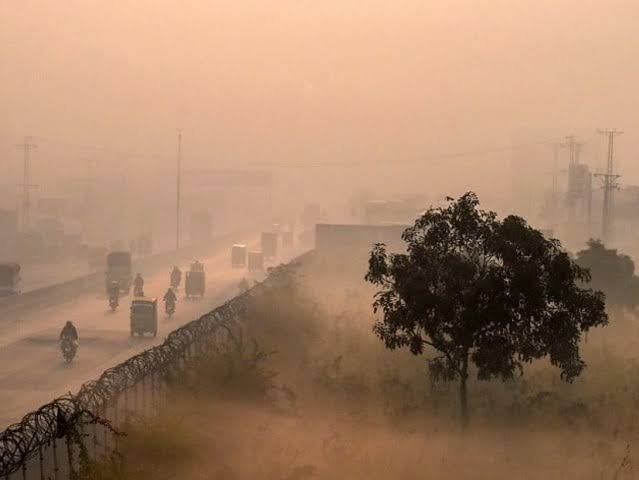
Pakistan is fighting for its very survival as deadly heatwaves, catastrophic floods, and melting glaciers threaten millions of lives and livelihoods, ranking the country among the world’s most climate-vulnerable nations — despite contributing less than 1% to global greenhouse emissions.
“We are in a fight for survival,” says Saleem Shaikh, spokesperson for the Ministry of Climate Change and Environmental Coordination. “But we will not surrender to despair.”
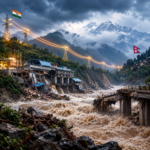
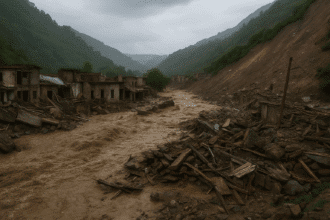
In 2022, unprecedented monsoon rains and glacial melt submerged one-third of Pakistan, killing 1,760 people, displacing 33 million, and destroying two million homes, causing $40 billion in economic losses. Then, in June 2024, temperatures in southern Pakistan soared to 49°C (120°F), killing 568 people and hospitalizing nearly 8,000 as power failures crippled cooling systems.
“These aren’t just statistics — they’re human stories of suffering,” says Shaikh.
Pakistan’s over 7,000 northern glaciers are retreating, threatening water security for 90% of the population that relies on the Indus River. But the country is fighting back. Shaikh points to aggressive climate initiatives: planting 3.5 billion trees, restoring 1.36 million hectares of land, and creating 84,000 jobs — “Pakistan’s green wall against climate chaos.”
In partnership with the UN, the $500 million Living Indus Initiative aims to revive the Indus Basin through wetland restoration, sustainable farming, and flood management. The government is also investing in renewable energy projects and aims for significant electric vehicle adoption by 2030 to cut emissions.
Pakistan has pledged a 50% emission reduction by 2030 under the Paris Agreement — but 35% of that goal depends on international funding. “We’re doing our part with a 15% domestic cut,” Shaikh explains. “But climate justice demands wealthy nations step up — we need grants, not loans, to avoid debt traps.”
The country launched a Carbon Market Policy in December 2024 to attract green investment and rolled out the $77 million Recharge Pakistan project to bolster water security by restoring wetlands and managing floods.
At the grassroots, the Clean Green School Program is active in 423 Islamabad schools, teaching climate literacy, waste management, and tree planting. “These students are becoming climate ambassadors,” Shaikh says.
Despite these efforts, challenges loom large. Pakistan needs $348 billion by 2030 to meet its climate goals, but less than 10% has been pledged. “COP28 promises must turn into real cash,” warns Shaikh. “Delay is denial for vulnerable nations.”
Experts like Sardar Khan Zimri warn of urban water crises, with Islamabad’s groundwater depleting at 3.5 feet per year, while Dr. Syeda Maria Ali highlights the urban heat island effect in cities like Karachi and Lahore, now 5–7°C hotter than rural areas due to concrete sprawl. Dr. Sawaira Safeer warns of rising public health risks, including heatstroke, dengue, and waterborne diseases.
Looking ahead, Pakistan aims to expand its Clean Green School Program to 30,000 schools by 2025, complete the first phase of the Living Indus Initiative by 2026, and meet its renewable energy targets by 2030.
Pakistan’s struggle is a global warning: if a low-emission nation can plant billions of trees and invest in renewables, bigger polluters must act faster. The world must honor its commitments, ensuring developing nations are not left to pay for the climate crisis caused by industrialized countries.