
ISLAMABAD: Prime Minister Shehbaz Sharif on Saturday said Pakistan’s economy has emerged from severe difficulties, declaring that key economic indicators now show encouraging improvement due to the sustained efforts of the government and its economic team.
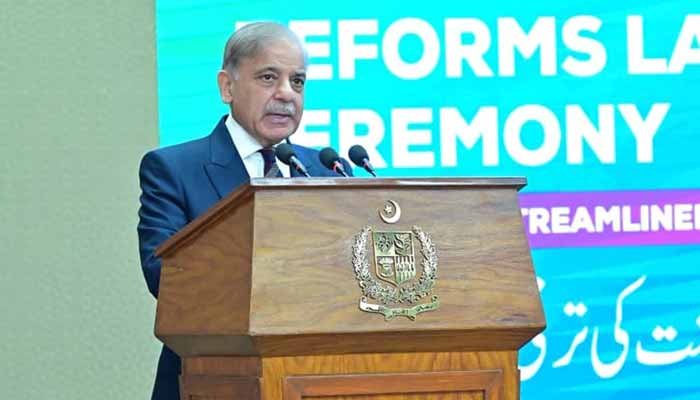
Speaking at the launch of the National Regulatory Reforms, the prime minister termed the initiative a “quantum jump” aimed at facilitating business activity, boosting exports, and attracting foreign direct investment (FDI). He said the reforms would benefit industry, agriculture, and trade while reducing delays, red tape, and practices that previously encouraged corruption and nepotism.
The prime minister recalled that when the current government took office, Pakistan was on the brink of financial default, inflation was soaring, interest rates were crippling businesses, and investor confidence—both local and foreign—had sharply declined. Despite these challenges, he said, the government remained resolute and steered the economy towards stability through teamwork, careful planning, and persistent effort over the past one and a half years.
He noted that the economy had stabilised after fears of default and pointed to the International Monetary Fund’s approval of a $1.2 billion tranche as a sign of renewed confidence. Excessive regulations, he said, had previously damaged the business environment, and the new framework would help streamline procedures and reduce wastage of time and resources.
Prime Minister Shehbaz said the government is now focused on accelerating growth and attracting foreign investment in key sectors, including agriculture, information technology, and mines and minerals. He also highlighted Pakistan’s strong relations with the United Kingdom and the United States, expressing hope for enhanced cooperation in the future.
Thanking the British government and the UK’s International Development department for their support, he described the UK as a long-standing partner in Pakistan’s development journey.
Emphasising the importance of youth, the prime minister said vocational training programmes with international certification were being expanded to help young Pakistanis secure productive employment at home and abroad. He added that tariff reforms and skills development would play a central role in the country’s long-term growth strategy.
Addressing the ceremony, Prime Minister’s Special Assistant Haroon Akhtar said the reforms signalled a transition from a regulatory state to a developmental state. He noted that tariff rationalisation, regulatory modernisation, and export-led industrial revival formed the backbone of the broader economic transformation agenda.
UK Minister of State for International Development Baroness Jenny Chapman described the reforms as a positive step, highlighting Pakistan’s entrepreneurial talent, natural resources, and growing role in global trade. She also pointed to expanding trade and investment ties between Pakistan and the United Kingdom.