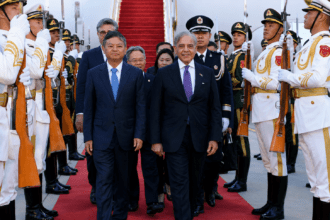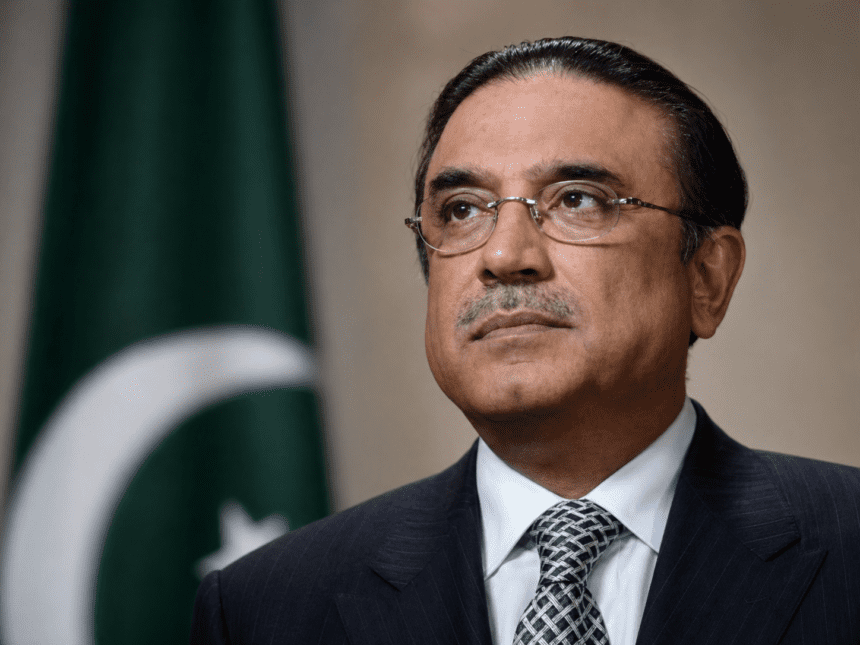
President Asif Ali Zardari began an official visit to China on April 25, 2026, in what Islamabad is presenting as another important round of high-level engagement between the two countries, with economic cooperation, trade and CPEC expected to sit at the center of the talks. According to reporting citing Pakistan’s Foreign Office, Zardari is due to travel to Changsha in Hunan from April 25 to 27 and then Sanya in Hainan from April 28 to May 1.
The trip comes at a moment when Pakistan is trying to keep its most important strategic partnerships steady while also looking for fresh economic breathing room. That gives this visit a bit more weight than a routine diplomatic stop. Officials and media reports say the meetings are expected to cover bilateral economic and trade cooperation, a review of ongoing joint projects, and broader Pakistan-China ties, including work linked to the China-Pakistan Economic Corridor.
Zardari’s itinerary includes two Chinese cities rather than a single ceremonial stop, which suggests the visit is meant to be substantive as well as symbolic. Reports say he is scheduled to hold meetings with senior Chinese leaders and engage on cooperation in areas ranging from economic development to strategic coordination. Some Pakistani outlets have also said defence cooperation is likely to come up in discussions, though the clearest and most consistently reported emphasis so far remains the economic track.
There is also a larger anniversary backdrop here. Pakistan and China are marking 75 years of diplomatic relations in 2026, and both sides have already launched commemorative activities for the milestone. That anniversary gives the visit extra political texture: it is not just about current projects, but about showing continuity in a relationship both governments still describe in unusually warm terms.
For Pakistan, the practical stakes are obvious. The country wants Chinese investment to keep moving, wants CPEC’s next phase to look credible, and wants to signal that its top-level political engagement with Beijing remains active. For China, Pakistan still matters as a longstanding strategic partner and as a key Belt and Road node, even if some projects have moved more slowly than either side once hoped. That broader reading is an inference based on the stated agenda and the long-running focus on trade, infrastructure and strategic cooperation.
At the very least, this visit is meant to send a clear public message: despite regional uncertainty and Pakistan’s domestic economic pressures, Islamabad wants Beijing to see the relationship as stable, active and still worth investing in. Whether that translates into new announcements, fresh financing or revived momentum on stalled initiatives will become clearer once the meetings in Changsha and Sanya are underway.