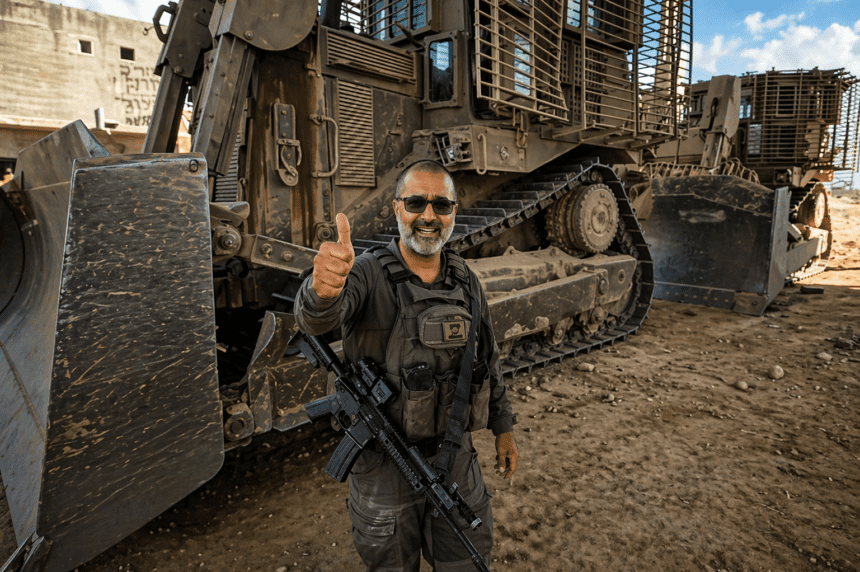
Israel’s decision to select Rabbi Avraham Zarbiv as a torchlighter for its 2026 Independence Day ceremony has triggered a fresh wave of outrage, pulling one of the country’s most symbolic national events into the center of the Gaza war debate. Zarbiv, a rabbinical judge and IDF reservist known for videos and statements tied to demolition activity in Gaza, was chosen for the state ceremony on Mount Herzl in Jerusalem, where torch-lighting is treated as a major national honor.
The choice became controversial almost immediately because Zarbiv has been publicly associated with calls to “flatten” Gaza, and because advocacy groups have already tried to pursue legal action against him over his conduct during the war. The Hind Rajab Foundation, a Brussels-based group that has filed multiple cases involving alleged crimes in Gaza, says it submitted a complaint accusing him of war crimes and crimes against humanity, citing what it describes as Zarbiv’s own public statements and video evidence. No court conviction has resulted from those allegations, and the claims remain accusations.
According to reporting on the announcement, Transportation Minister Miri Regev, who oversees the ceremony, presented Zarbiv’s selection as a tribute to the national-religious public and to reservists who fought in the war. That framing matters. In Israel, the torch-lighting ceremony isn’t some side event; it’s one of the most watched and politically loaded moments of Independence Day, and the people chosen to participate are meant to embody a national story the government wants to tell.
What makes this pick especially combustible is that it lands at a moment when legal scrutiny over Gaza-related conduct has become more visible, not less. The Hind Rajab Foundation has tried to build cases against individual Israelis using public posts, videos, and travel-based legal complaints, and last year Belgian prosecutors questioned two Israelis over Gaza-related allegations after a complaint from the same group. No charges were filed in that case, but it showed that these efforts are no longer merely rhetorical. They’re beginning to test real legal systems.
Zarbiv’s selection also drew attention because he was named alongside other prominent torchlighters, including Argentine President Javier Milei, one of Israel’s most outspoken international supporters. That pairing gave the ceremony extra visibility beyond Israel and helped turn what might have been a domestic political argument into a broader international story about symbolism, accountability, and the message Israel is choosing to project while the Gaza war remains under intense global scrutiny.
For supporters of the decision, Zarbiv represents religious Zionist commitment, wartime service, and ideological clarity. For critics, he represents something much darker: the normalization, even celebration, of rhetoric and conduct linked to the destruction of Gaza. That’s really where the story sits. Not just in one man’s selection, but in what that selection says about the political mood inside Israel right now — and about how a state ceremony can become a battleground over memory, legitimacy, and war.