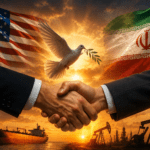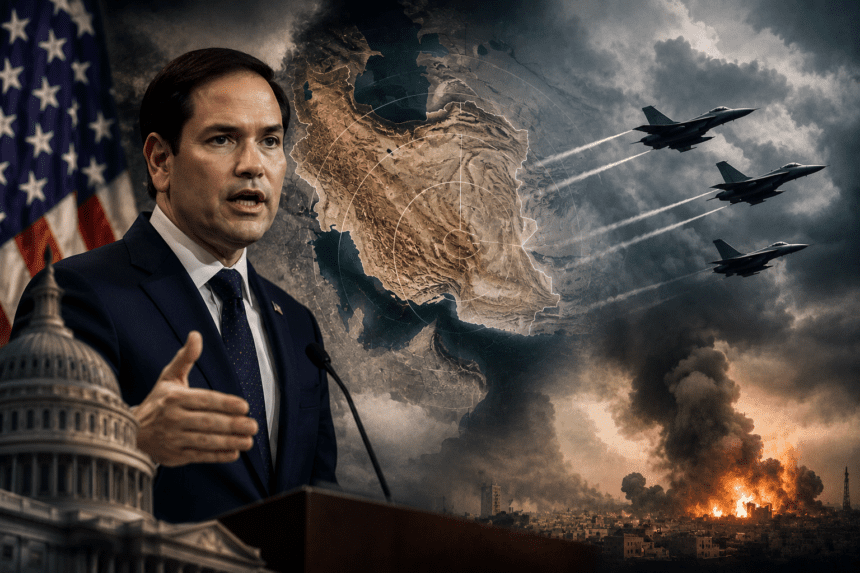
New Delhi: US Secretary of State Marco Rubio said on Sunday that an announcement could come within hours on a possible agreement with Iran aimed at formally ending the Middle East war, as diplomatic efforts intensified around the Strait of Hormuz and Tehran’s nuclear programme.
Speaking to reporters in New Delhi after talks with Indian Foreign Minister Subrahmanyam Jaishankar, Rubio said there was a possibility the world could receive “some good news” later in the day. He said the emerging understanding would address US concerns over the Strait of Hormuz, which has become a central flashpoint in the conflict.
Rubio’s comments came after President Donald Trump said a deal with Iran had been “largely negotiated.” The proposed arrangement is reportedly aimed at ending hostilities and reopening the vital shipping route, through which a major share of global oil and gas trade passes.
The US secretary of state said any agreement would also begin a process toward Washington’s long-standing goal of ensuring that Iran does not acquire a nuclear weapon. He cautioned, however, that the possible announcement would not necessarily mean every major dispute had been settled.
The Strait of Hormuz has been one of the biggest pressure points in the crisis. Disruption in the waterway has rattled energy markets and raised fears of wider economic fallout, particularly for countries dependent on Gulf oil shipments. Rubio said Washington’s position remained clear: attacks on commercial shipping and efforts to block navigation were unacceptable.
Iran, meanwhile, has signalled caution. Tehran’s top negotiator said Iran would not compromise in talks with the United States, citing distrust of Washington and warning that any renewed military action would bring a stronger Iranian response.
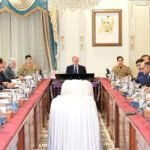
The diplomatic push has drawn in several regional actors. Reports suggest Pakistan, Qatar and Egypt have played roles in mediation efforts, while the proposed framework could include a ceasefire, steps to reopen the Strait of Hormuz and further negotiations on nuclear issues.
Rubio was in India for talks covering bilateral and regional issues, including trade, energy, maritime security and the Middle East crisis. Indian officials also stressed the importance of safe navigation and stability in energy routes, concerns that have become more urgent as tensions around the Gulf continue.
For now, the situation remains delicate. Rubio’s remarks suggest diplomacy has moved forward, but not yet crossed the finish line. Any announcement later Sunday would likely be an initial political framework rather than a final settlement.
Still, even a partial breakthrough would matter. After weeks of conflict and uncertainty, reopening the Strait of Hormuz and locking in a ceasefire could ease global energy fears and give negotiators room to tackle the harder question: Iran’s nuclear future.