

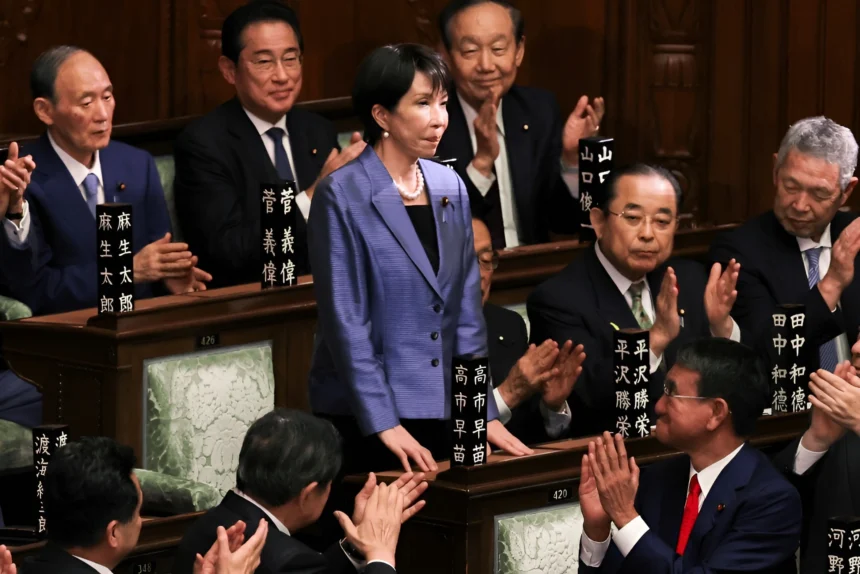
Tokyo, Japan October 21, 2025
Japan has entered a new chapter in its political history as Sanae Takaichi becomes the country’s first-ever female Prime Minister, breaking a barrier that stood for more than 75 years since the nation’s post-war government was established.
Takaichi, 63, a conservative lawmaker long known for her loyalty to the late Shinzo Abe and her tough stance on national security, was elected leader of the ruling Liberal Democratic Party (LDP) earlier today. The parliamentary vote that followed secured her position as the country’s 102nd Prime Minister.
A Milestone Moment for Japan
The result marks a symbolic and deeply significant shift for Japan, where female representation in politics remains among the lowest in the developed world. Despite decades of advocacy for gender equality, Japan had never before seen a woman rise to its top political office until now.
“It’s a great honor and an immense responsibility,” Takaichi told reporters after the vote. “I will dedicate myself to protecting Japan’s national interests while advancing the role of women in every field of society.”
Her election was celebrated by supporters as a “historic leap,” while critics expressed cautious optimism, questioning how far her conservative policies will go toward empowering women in practice.
Abe’s Protégé and Policy Hawk
Often described as a political disciple of Shinzo Abe, Takaichi has built her career around a mix of traditional conservatism and assertive nationalism. She’s known for advocating constitutional reform to strengthen Japan’s Self-Defense Forces and for her unapologetically pro-growth economic agenda, which includes tax incentives for innovation and measures to counter population decline.
During her campaign, she pledged to “restore pride and prosperity” to Japan and positioned herself as a steady hand capable of navigating a turbulent global landscape marked by economic uncertainty and rising regional tensions.
Reactions Across Japan and Abroad
Reaction to Takaichi’s victory was swift.
U.S. President Kamala Harris congratulated her in a statement, calling the election “a powerful signal of progress and partnership.” Meanwhile, Chinese state media noted the “historic nature” of her rise but urged Japan to maintain “constructive diplomacy” in regional affairs.
At home, Japanese citizens expressed a mix of pride and pragmatism. “It’s inspiring to finally see a woman lead the country,” said Ayaka Kobayashi, a 29-year-old office worker in Tokyo. “But what really matters is whether she can deliver on issues that affect our daily lives.”
Challenges Ahead
Takaichi inherits a divided parliament, a slowing economy, and ongoing debates over defense spending and demographic decline. Political analysts note that her success will depend on balancing reform with stability a line few before her have managed to walk successfully.
“She’s a symbol of change, but her policies will be closely watched,” said Koichi Nakano, a political science professor at Sophia University. “If she can combine her conservative roots with inclusive leadership, this could redefine Japan’s political future.”
As Japan watched her bow deeply before the Diet following the vote, one thing was clear: whether her tenure becomes transformative or turbulent, Sanae Takaichi has already rewritten history.