

The Spanish government has ordered the southeastern town of Jumilla to revoke a ban on using public sports facilities for religious gatherings a move widely seen as targeting the local Muslim community.
The conservative-led town council, backed by the far-right Vox party and the centre-right Popular Party (PP), passed the ban last week. It prohibited municipal sports spaces from hosting “cultural, social, or religious activities foreign to the City Council.” This effectively stopped local Muslims from celebrating Eid al-Fitr and Eid al-Adha in those venues, a tradition followed for years.
Madrid swiftly condemned the measure as unconstitutional and discriminatory. Migration Minister Elma Saiz called it “shameful” and urged the town’s leaders to apologise. On Monday, Territorial Policy Minister Ángel Víctor Torres confirmed the central government’s formal order to cancel the ban, stating: “There can be no half measures when it comes to intolerance. Freedom of worship is a constitutional right.”
Jumilla’s mayor, Seve González, defended the ban, claiming it was not aimed at any specific group and was meant to “promote cultural campaigns that defend our identity.” Vox leaders celebrated the decision, insisting Spain must protect its Christian heritage and declaring, “Spain is not Al Andalus” a reference to the country’s Muslim-ruled past.
Muslim leaders, however, strongly criticised the move. Mohamed El Ghaidouni, from the Union of Islamic Communities of Spain, called it “institutionalised Islamophobia.” UN Special Envoy Miguel Moratinos also expressed “deep concern” over the rise of xenophobic and Islamophobic rhetoric in parts of Spain.
The controversy comes amid heightened tensions over immigration and multiculturalism in the Murcia region, following violent clashes between far right groups and immigrant communities last month.
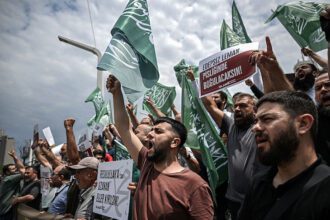
For centuries, Spain was under Muslim rule, leaving a lasting cultural and architectural legacy from the Arabic influence in the Spanish language to landmarks like Granada’s Alhambra Palace. The dispute in Jumilla mirrors similar moves by right-wing governments in Europe, such as in Monfalcone, Italy, where Muslim prayers were banned in a cultural centre, sparking mass protests.