In today’s fast paced world, where compassion and empathy often seem lost, the humanitarian values of Islam shine as a powerful source of hope and harmony. These values rooted deeply in the Quran and the teachings of Prophet Muhammad (PBUH) are often described as the Pillars of Kindness, guiding Muslims in their everyday lives.
1. Kindness in Islam – More Than Just Being Nice
In Islam, kindness (Ihsan) goes beyond good manners it means doing good with excellence, sincerity, and the intention to improve the lives of others. The Quran frequently encourages kindness. For example:
“And speak to people good [words].” (Quran 2:83)
This verse reminds us that treating people with respect and compassion is not just a personal trait it’s the foundation for a healthy society. Ihsan encourages Muslims to reflect kindness in both actions and attitude.
2. Humanitarian Values from the Quran and Hadith
Islam teaches several values that form the basis of ethical behavior and humanitarian conduct. Key among them are:
- Compassion (Rahmah): A central quality in Islam. Allah is called “The Most Merciful” (Ar-Rahman), and Muslims are encouraged to reflect this mercy in their dealings with others.
- Forgiveness (Maghfirah): Letting go of grudges brings peace and unity. The Quran repeatedly encourages believers to forgive as Allah is Forgiving.
- Honesty (Sidq): Truth builds trust. Being honest is not just a good habit but a religious duty.
- Humility (Tawadu): A humble person cares for others, listens, and helps without seeking fame or reward.
These values serve as a moral compass, shaping how Muslims treat family, neighbors, strangers, and even opponents.
3. Charity – A Practical Expression of Kindness
Charity (Zakat) is one of the Five Pillars of Islam. It requires Muslims to give a portion (usually 2.5%) of their savings to those in need. This system:
- Helps reduce poverty
- Promotes fairness
- Builds a caring community
The Quran beautifully describes the impact of charity:
“The example of those who spend their wealth in the way of Allah is like a seed [of grain] which grows seven spikes; in each spike is a hundred grains.” (Quran 2:261)
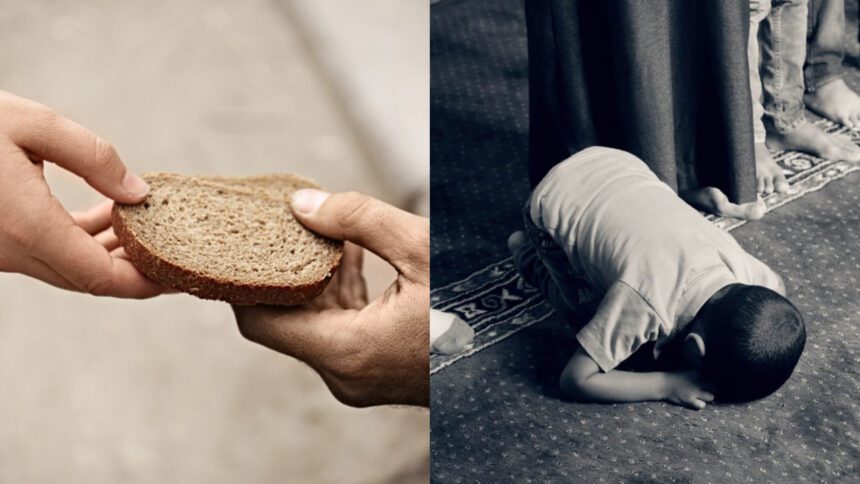
In addition to Zakat, Muslims are encouraged to give Sadaqah voluntary charity at any time, in any amount. Even a smile or a kind word is considered a form of Sadaqah.
4. Justice – A Core Islamic Value
Justice (‘Adl) is a foundation of Islamic ethics. The Quran instructs:
“Stand firmly for justice… and do not let hatred of a people prevent you from being just.” (Quran 5:8)
Islam teaches that justice must be applied fairly regardless of race, religion, or personal feelings. It means protecting the rights of all, especially the weak and the voiceless. Justice in Islam extends to:
- Fair wealth distribution
- Honesty in business
- Equal treatment in legal matters
- Advocacy for the oppressed
Justice is not optional it is an obligation for all believers.
5. Community Support and Brotherhood
Islam strongly promotes the idea of community (Ummah) a bond that connects Muslims like one big family. This sense of unity encourages believers to support each other, especially in times of need.
The Prophet Muhammad (PBUH) said:
“None of you truly believes until he loves for his brother what he loves for himself.”
This hadith shows that true faith includes caring for others. Whether through helping neighbors, visiting the sick, or sharing meals, Islam encourages daily acts of support and service to strengthen the community.
6. Global Impact of Islamic Humanitarian Values
Islamic humanitarian values go beyond borders. Many organizations, like Islamic Relief and Red Crescent, are inspired by these values and work globally to:
- Respond to disasters
- Provide clean water and food
- Offer medical aid
- Support orphans and refugees
Their work reflects the Quranic values of charity, justice, and compassion. These efforts help Muslims live out their faith by serving humanity regardless of religion or nationality.
Conclusion: A Call to Kindness
The Pillars of Kindness in Islam compassion, charity, justice, and community support are not just religious teachings but a way of life. These values help build peaceful, fair, and caring societies.
In today’s world full of challenges, remembering and practicing these humanitarian principles is more important than ever. They remind us to treat others with dignity and love, and to use our faith as a force for good.
By embracing these timeless values, Muslims and Non Muslims alike can work together to create a more compassionate and united world.