
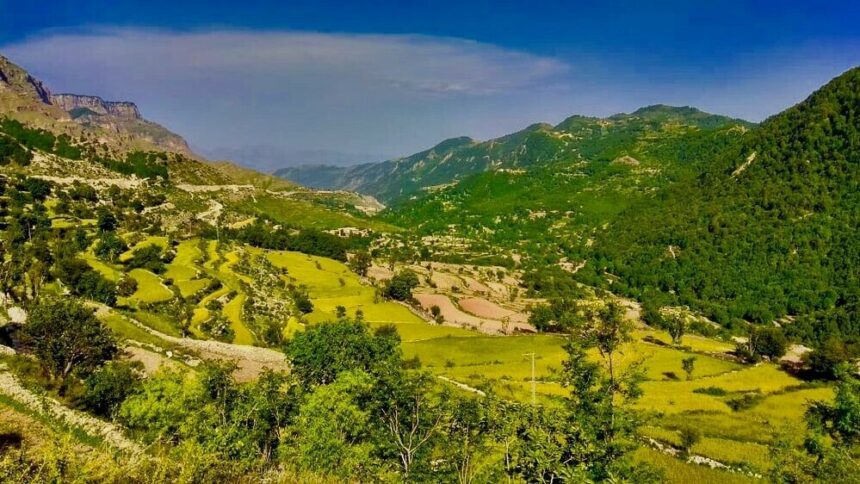
KHYBER PAKHTUNKHWA: A worsening security and humanitarian situation in Tirah Valley has exposed serious governance failures, as the absence of basic services and weak law enforcement continues to leave local communities vulnerable and unsafe.
Security officials say poor administration has created a vacuum that is being exploited by extremist and criminal groups, including Fitna-al-Khawarij, which they accuse of fueling instability through drug trafficking and extortion. Residents, meanwhile, struggle without access to education, healthcare or adequate policing in the remote region.
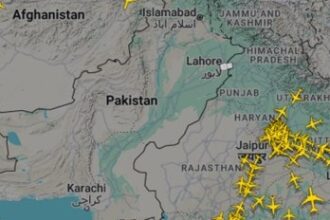
Inspector General Frontier Corps (FC) Khyber Pakhtunkhwa North said managing the Pakistan-Afghanistan border remains a major challenge due to its harsh terrain. Of the 1,224-kilometre-long border, around 717 kilometres fall under FC responsibility, stretching across snow-covered mountains, steep peaks and narrow passes.
To counter infiltration, the FC has installed surveillance cameras at multiple locations. The IG said border fencing between Pakistan and Afghanistan has now been completed for the first time, effectively formalising it as an international border and limiting unchecked movement. However, he stressed that lasting security depends on cooperation from both sides of the border.
Highlighting the human cost of the conflict, the IG revealed that last year alone, 64 FC personnel were martyred and 198 injured in Bagh Maidan. He said no other institution had suffered such heavy losses in the area. In some places, such as Duatoi, narrow passages exist where effective checks are not possible due to the absence of legal authority.
Law enforcement resources remain critically low. Officials said only three police personnel are currently responsible for monitoring the entire local population, underscoring the scale of neglect in the valley.
Wing Commander Colonel Waqas painted an even bleaker picture of civilian life, noting that for nearly 60 kilometres in Tirah Valley there is no district administration, no police station and no hospital. Government schools are non-existent, and no teachers have been appointed, leaving children without formal education.
“When children are denied education, awareness does not develop, and they are pushed towards illegal activities,” he said.
To fill the gap, the FC has established 16 schools in the valley and hired teachers independently to provide basic education. In the absence of healthcare facilities, residents often turn to FC personnel even for minor medical needs. The force also organises free medical camps to support the local population.
Drug trafficking remains a major concern, with officials alleging that proceeds from narcotics and extortion are used to finance attacks against security forces and civilians.
Authorities warn that unless governance failures are urgently addressed, militant and criminal networks will continue to strengthen their foothold, deepening both the security crisis and the everyday hardships faced by the people of Tirah Valley.